NEEDО · IMPORT PROCUREMENT
Supplier Payment Terms for Importers: What to Check Before Paying
The payment term on a supplier quotation determines more than when money leaves your account. It affects your cash flow, the evidence you receive before paying, the leverage available if goods are late or nonconforming, and the amount of loss you could face if the counterparty does not perform. For importers, the goal is not to find one universally safest payment method. It is to align payment milestones with the supplier relationship, the order, the documents, the delivery route and the checks you can realistically complete. This guide is a decision checklist, not legal or banking advice; confirm material transactions with your bank and qualified advisers.
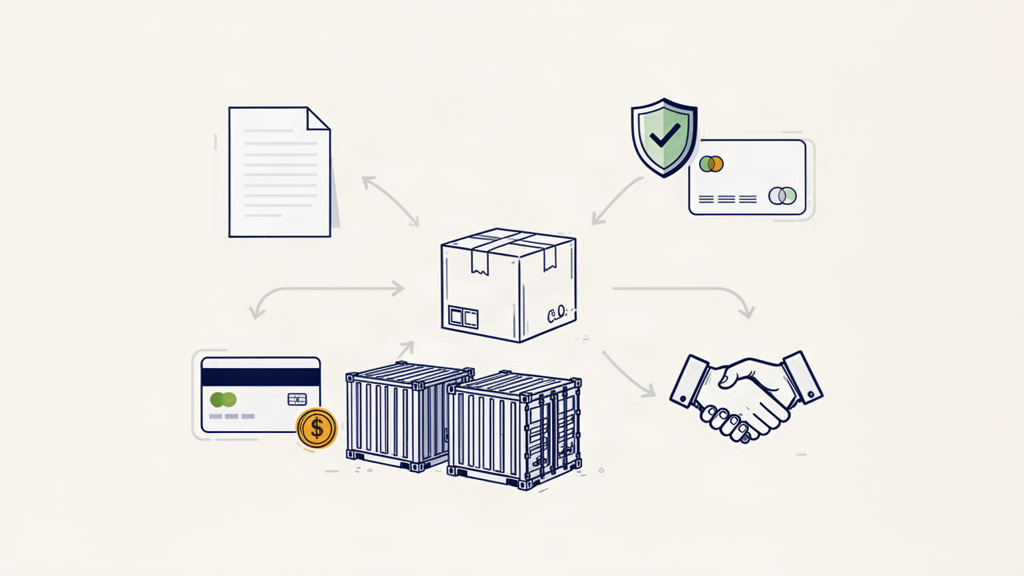
Write the full payment term before comparing options
Do not rely on a phrase such as 30% deposit or balance before shipment without defining the event that makes each amount due. Record the deposit amount, currency, due date, balance, payment method, beneficiary, bank fees, conditions for release and what happens if production, inspection or shipping is delayed. The purchase order, quotation, pro forma invoice and contract should tell the same commercial story. If they conflict, pause and resolve the conflict in writing before sending money.
Also separate payment timing from delivery responsibility. Incoterms® rules can allocate delivery tasks, costs and risks, but they do not by themselves settle payment timing, product acceptance, ownership transfer or remedies for breach. Put those matters in the contract and make sure the payment trigger is something the parties can identify and evidence.
Capture these fields
- Supplier legal name and verified beneficiary name
- Order value, currency, exchange-rate assumption and bank fees
- Deposit, milestone and final-balance amounts and dates
- Evidence required before each payment becomes due
- Inspection, delivery, acceptance and document requirements
- Late delivery, short shipment, defects, cancellation and dispute process
Compare the common payment structures
Advance payment can be commercially reasonable for a custom-made product, a small order or a supplier that must purchase materials up front, but it places more performance risk on the buyer until the agreed goods or evidence are received. A deposit followed by a balance at a defined milestone spreads cash exposure across the order, provided the milestone is objective and the contract explains what happens if it is missed. Avoid treating a supplier's informal promise as equivalent to independent protection.
A letter of credit can make payment conditional on presentation of documents that comply with its terms, but it creates fees, documentary requirements and a real risk of discrepancies. Documentary collection uses banks to handle documents and payment instructions but does not provide the same payment guarantee as a letter of credit. Open-account terms can preserve buyer cash flow but may be unavailable to a new buyer or require a negotiated credit relationship. Escrow may help in some transactions only when the provider, release conditions, dispute process and jurisdiction are properly checked. No structure eliminates every risk.
Questions for each option
- What exactly must happen before funds are released?
- Who independently checks the documents or milestone evidence?
- What fees, amendment costs and processing time apply?
- What happens if the documents contain discrepancies or the goods fail inspection?
- Does the method fit the order value, supplier history and country-specific banking rules?
Tie each milestone to evidence you can actually verify
A payment schedule is only as useful as its triggers. If a balance is due before shipment, specify which documents must be supplied and whether they prove only that a shipment was booked or that goods were inspected, handed to a carrier or loaded. A commercial invoice, packing list, inspection report, transport document and proof of delivery answer different questions; do not treat them as interchangeable. For made-to-order goods, the agreed inspection plan and acceptance criteria should be written before production starts.
Where a milestone depends on a third party, name the evidence and who will review it. If you need a pre-shipment inspection, agree the scope, sampling method, acceptance threshold, timing, cost and process for a failed inspection. If the product is regulated or safety-critical, use the appropriate qualified reviewer. Avoid a contract that makes the buyer pay a large balance based on an undefined phrase such as ready to ship.
Make milestones observable
- Deposit due only after supplier identity and contract details are reconciled
- Production milestone supported by the agreed progress evidence
- Inspection milestone linked to a written report and acceptance criteria
- Shipment milestone linked to the specific transport document required
- Final balance and document release sequence stated without ambiguity
Verify supplier identity and bank instructions separately
A genuine business can still be the wrong counterparty for a particular order, and a real supplier's email account can be compromised. Compare the legal name, registered details where available, quotation, invoice, contract and bank beneficiary. Investigate unexplained differences rather than assuming they are harmless or proof of fraud. Check the supplier using independent contact details obtained from a reliable source, especially when the payment destination changes.
Treat a new bank account, beneficiary change, urgent request to bypass normal controls or last-minute change to payment terms as a separate verification event. Do not verify a change by replying to the same message that announced it. Use a known, independently confirmed telephone number or other trusted channel, follow your own dual-approval controls and keep a record of who confirmed the change. For high-value or unfamiliar transactions, obtain appropriate independent due diligence and professional advice before payment.
Pre-payment identity checks
- Supplier name and address consistent across reliable records and contract documents
- Beneficiary name and bank country explained and independently confirmed
- Contact person and authority to change payment instructions verified
- Unexpected changes checked through a separate trusted channel
- Required sanctions, export-control, tax or regulatory checks completed by the responsible party
Calculate the real cash exposure and the cost of protection
Compare options using the amount of cash at risk at each point, not just the quoted bank fee. A low-fee transfer may leave a large advance exposed for weeks; a documentary credit may cost more but provide a defined documentary process; an inspection or escrow arrangement may add cost and time. The right trade-off depends on order value, the cost of delay, the supplier's record, product customization, recovery options and your working-capital limits. Ask your bank for the actual fee schedule and processing requirements rather than assuming a standard rate.
Build a simple schedule showing cumulative cash paid, evidence received, remaining unpaid balance and the next condition. Add freight, insurance, inspection, bank charges, currency conversion and other transaction-specific expenses when they affect the decision. Keep estimates marked as estimates and confirm applicable taxes, customs rules and local legal requirements with the appropriate professionals. A spreadsheet can make the exposure visible, but it cannot guarantee that a bank, supplier or court will resolve a dispute in your favor.
Cash-exposure worksheet
- Amount due at order placement and the reason it is due
- Additional cash required before inspection or dispatch
- Balance held until the agreed documents or acceptance event
- Bank, intermediary, currency conversion and amendment fees
- Potential loss if the supplier fails at each stage
- Recovery route, insurance or independent protection actually confirmed
Match the terms to the relationship and order
A first order with a supplier whose performance is not yet established usually deserves more verification and tighter milestone definitions than a routine replenishment from a supplier with documented performance. A custom tool, unique product or made-to-order batch can require a deposit, but the deposit should be understood alongside the supplier's identity, production evidence, cancellation terms and the cost of switching sources. For a repeat order, historical delivery and quality performance may support a different structure, but do not let familiarity replace current checks when the amount or risk has changed.
Country conditions, bank capabilities, local law, product type and the contract can materially affect which methods are available and how disputes are handled. Official U.S. Department of Commerce guidance explains several international payment methods from an exporter perspective; it is useful for understanding trade-offs, but it is not a universal rulebook for importers in every jurisdiction. Discuss the transaction with your bank and relevant local advisers, particularly for letters of credit, documentary collections, regulated goods or significant credit exposure.
Use a proportionate review
- New supplier or high-value order: strengthen independent identity, document and milestone checks
- Custom production: define specifications, inspection and failure remedies before the deposit
- Repeat supplier: compare current performance and terms with the agreed baseline
- Unusual country, currency or regulatory exposure: get specialist advice before commitment
- Any unresolved beneficiary or contract mismatch: stop and resolve it before payment
Worked example: compare two offers without assuming one is safer
Illustrative example only: Supplier A requests a large advance and the remainder before dispatch, while Supplier B requests a smaller deposit, a documented production milestone and a balance after a defined inspection and shipment-document sequence. Supplier B's offer has a higher quoted price. Do not automatically choose B or A. Calculate the cash paid at each milestone, the evidence available at that time, the fees, the delivery scope, the inspection arrangements and the recovery options actually written into each contract. Ask both suppliers to clarify any missing conditions on the same basis.
If Supplier B's inspection trigger is vague or the beneficiary cannot be independently confirmed, the apparent advantage may disappear. If Supplier A can provide strong, independently checked evidence and a suitable payment instrument, its offer may deserve further review. The decision should state what is confirmed, what is assumed, what remains uncertain and which questions must be answered before approval. These fictional terms illustrate a method; they are not a recommended deposit percentage or a prediction of either supplier's performance.
Decision note
- Commercial comparison completed on equivalent order scope
- Payment triggers and evidence written into the draft contract
- Supplier and beneficiary checks completed at the required level
- Fees, currency exposure and dispute route confirmed with the bank or adviser
- Open risks assigned to an owner before the payment deadline
Use Needo to review the actual supplier terms
Needo can organize a quotation, purchase order and contract draft into a payment checklist, compare alternative terms, identify inconsistent names or missing milestones and prepare questions for your supplier and bank. Provide the actual order value, product, destination, proposed payment schedule and the documents you have. Ask it to separate source-backed facts from assumptions, calculate the cash exposure from your figures and highlight the items that need independent confirmation.
Keep the final decision with the responsible buyer, finance team and advisers. Needo does not guarantee a supplier, bank instrument or transaction outcome and should not authorize payment on your behalf. The useful result is a clear decision trail: what you checked, what evidence supports it, which risks remain and what must be resolved before money moves.
Sources and further reading
- U.S. Department of Commerce — Methods of Payment
Official overview of common international payment methods and the trade-offs between buyer cash flow, seller payment risk and documentary controls. The guidance is written primarily for U.S. exporters; confirm the rules and banking options relevant to your own jurisdiction.
- U.S. Department of Commerce — Letter of Credit
Explains how a letter of credit makes payment conditional on documents meeting stated terms, and why documentary discrepancies, fees and bank review matter.
- U.S. Department of Commerce — Documentary Collections
Describes documentary collection mechanics and the important limitation that banks facilitate document exchange but do not guarantee payment as they may under a complying letter of credit.
Sources support the specific points noted above. Confirm current requirements for your product, destination and contract before committing.
Need the actual problem solved?
This guide explains the method. Needo can work from your specific requirement, compare relevant options, verify important details and help move the next step forward.
Start with your exact problem →Selling or exporting? See live buyer requirements by product · see a sample verified shortlist