NEEDО · SUPPLIER QUALITY
How to Evaluate a Supplier Sample Before Placing a Bulk Order
A sample is useful only when you know what it is supposed to prove. A product that looks right in a photo may fail a dimension, material, fit, performance, packaging or labelling requirement. Before approving a bulk order, turn the requirement into measurable checks, inspect the sample against those checks and record what the sample does—and does not—establish. A sample approval is not a guarantee that every production unit will be identical.
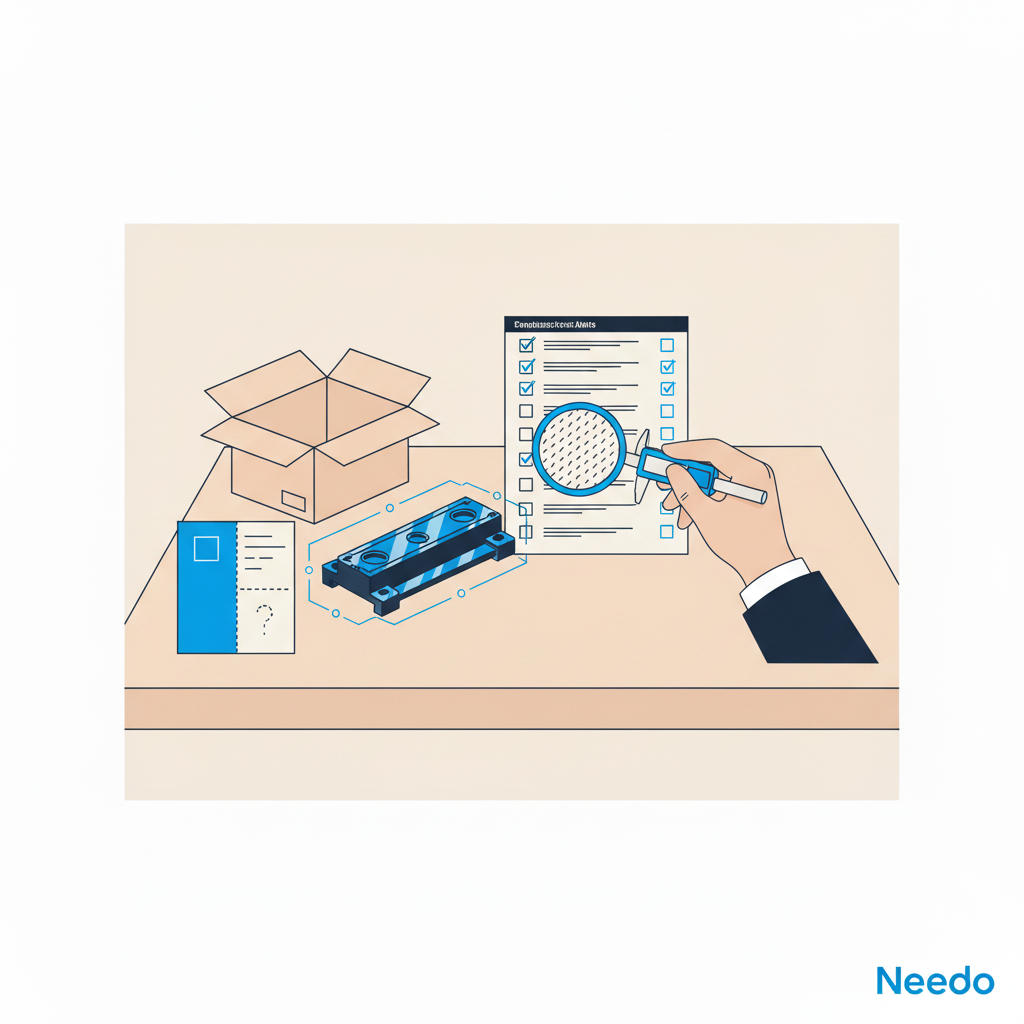
Freeze the specification before judging the sample
Create one version-controlled specification for the sample and the eventual bulk order. Include the product or drawing revision, material or grade, critical dimensions and tolerances, colour or finish, performance requirements, packaging, labelling, accessories and required documents. Mark which items are mandatory and which are preferences. If the specification changes after the sample arrives, record the revision rather than quietly judging the sample against a moving target.
Where a requirement is technical or safety-critical, use the relevant drawing, test method, regulatory requirement or qualified technical owner. Do not invent tolerances or declare compatibility from appearance alone. If the supplier has proposed an alternative, compare it against each must-match requirement and obtain written acceptance before treating it as equivalent.
Sample specification checklist
- Exact product, model, material or grade
- Drawing/specification number and revision
- Critical dimensions, tolerances and interfaces
- Function, performance or compatibility checks
- Finish, colour, workmanship and visible defects
- Packaging, labels, accessories and documents
- Mandatory requirements versus acceptable variation
Check identity and traceability of the sample
Record who supplied the sample, when it was received, the quoted model or SKU, sample charge, shipping reference and any lot or batch identifier available. Photograph the sample from useful angles and capture labels or markings. Keep a retained reference sample when practical and appropriate, with a label that links it to the specification revision and approval record.
Ask whether the sample is production-equivalent, hand-finished, specially selected or made using a different process. A polished prototype may demonstrate design intent without proving that normal production can meet the same result at scale. If the sample's origin or configuration is unclear, resolve that question before using it as the basis for a bulk commitment.
Inspect against objective acceptance checks
Use a checklist that matches the product's risk. Visual inspection may be enough for some cosmetic features, while dimensions, fit, electrical performance, material composition or durability may require suitable measuring equipment, a defined test or a qualified inspector. Record the method, instrument where relevant, result, acceptance criterion and evidence. If a check was not performed, mark it not tested—not passed.
For repeat production lots, a statistical sampling plan may be appropriate. ISO 2859-1:2026 describes acceptance-sampling schemes for lot-by-lot inspection by attributes. Choosing a plan, AQL and sample size requires a suitable quality agreement and an understanding of the risks; do not copy a random sample size from a generic blog or treat sampling as a replacement for critical safety or functional tests.
Record each check
- Requirement and acceptance criterion
- Inspection or test method
- Observed result and supporting photo/report
- Pass, fail, conditional or not tested
- Defect severity and effect on use
- Owner and due date for unresolved questions
Separate defects from preferences
Classify findings so the supplier and your team know what must be corrected. A critical issue may make the item unsafe or unusable; a major defect may prevent it meeting the contract; a minor cosmetic issue may be acceptable only if your specification allows it. These categories should be defined for your product and agreement, not assumed to be universal.
For every failure, show the exact requirement, what was observed and the evidence. Ask the supplier to explain the cause and propose a correction. If a deviation is acceptable, record who approved it and whether it changes price, performance, compliance, warranty or delivery. Do not bury a material exception in an email thread.
Sample review outcome
- Approved: all required checks passed with recorded evidence
- Conditional: limited, named actions must close before bulk approval
- Rejected: a mandatory criterion failed or evidence is insufficient
- Not evaluated: required tests or documents remain outstanding
Test whether the bulk-production process can repeat the result
A single good sample does not prove consistent output. Before a large order, ask how the supplier will control the features that matter: approved materials, tooling or moulds, process settings, inspection points, batch traceability, packaging and change approval. The appropriate controls depend on the product and the consequence of a defect.
For customised goods, preserve the approved sample photos, measured specifications, artwork and packaging version as a reference. Ask the supplier to confirm in writing which version will be used in production and how substitutions or process changes will be communicated. Consider a pre-production sample, first-article check or independent inspection where the order value or risk justifies it.
Bulk-order controls to agree
- Reference sample and specification revision
- Material and component substitutions requiring approval
- In-process and final inspection responsibilities
- Defect handling, rework, replacement and acceptance process
- Packaging, labels and lot/batch traceability
- Pre-shipment inspection and release criteria where appropriate
Link sample approval to commercial and delivery terms
Check that the quote and purchase order describe the same approved configuration, quantity, price, tooling, packaging, lead time and delivery basis. Clarify whether sample fees are credited against the order, what happens if a revised sample is needed and when the production lead time begins. Keep those terms explicit so a sample delay or design change does not silently alter the commitment.
Do not pay a bulk deposit simply because a sample arrived. Supplier identity, payment instructions, contract terms and sample quality are related but separate checks. If material facts remain unverified, pause and resolve them proportionately to the transaction's value and risk.
Copy-ready sample approval record
Use this record to make the decision reviewable by procurement, quality and the supplier. Replace placeholders with observed facts; do not mark an item approved because the supplier says it is compliant.
Sample record fields
- Supplier, product/SKU and sample reference
- Specification/drawing revision and date received
- Tests performed, methods and results
- Photos, measurement sheet and supporting reports
- Defects, deviations and open questions
- Decision: approved, conditional, rejected or not evaluated
- Required corrective action, owner and deadline
- Bulk-production controls and reference sample location
- Approver, approval date and applicable purchase-order revision
Use Needo to organise the review
Needo can turn your specification and sample observations into a structured checklist, compare supplier responses and prepare questions about missing evidence. It should not label a sample compliant, a supplier verified or a bulk order safe unless the recorded evidence supports that conclusion.
Provide the specification, sample photos or test notes, intended use, quantity, delivery destination and critical requirements. Review the checklist with the responsible technical or quality owner, then record the actual approval decision before placing the bulk order.
Sources and further reading
- ISO — ISO 2859-1:2026 sampling procedures
Current international standard overview for acceptance sampling by attributes in lot-by-lot inspection; it is not a substitute for product-specific acceptance criteria or critical testing.
- U.S. Department of Commerce — Perform Due Diligence
Guidance on assessing business partners and transaction risk; sample quality checks should be kept distinct from identity and commercial due diligence.
Sources support the specific points noted above. Confirm current requirements for your product, destination and contract before committing.
Need the actual problem solved?
This guide explains the method. Needo can work from your specific requirement, compare relevant options, verify important details and help move the next step forward.
Start with your exact problem →Selling or exporting? See live buyer requirements by product · see a sample verified shortlist