NEEDО · SUPPLY CONTINUITY
How to Find and Qualify a Backup Supplier Before a Stockout
A backup supplier is useful only if it can actually supply the item you need, at the required quality and quantity, within a workable time. A name in a spreadsheet is not a qualified second source. The goal is to identify the items where a disruption would hurt, find plausible alternatives while there is still time to evaluate them, and resolve the most important technical and commercial unknowns before an urgent order makes every trade-off more expensive.
Start with the items that could stop the operation
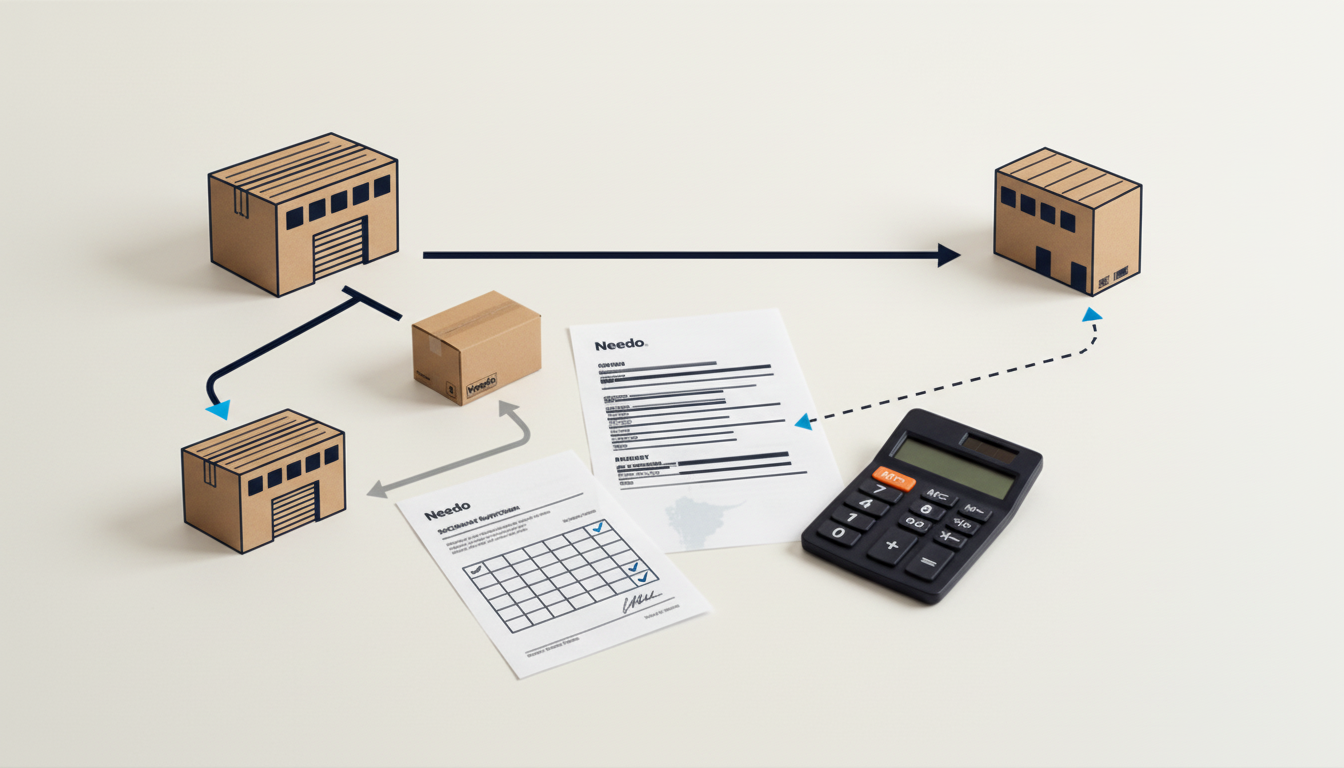
Do not begin by trying to duplicate every supplier relationship. List the materials, components or finished goods whose absence would delay a shipment, stop a production line, break a customer commitment or create a compliance problem. Consider how long each item takes to replace, whether a customer must approve a change, whether tooling or testing is required, and whether several products depend on the same upstream source.
The National Institute of Standards and Technology's manufacturing guidance recommends mapping supply chains and using the bill of materials to understand component and supplier dependencies. That is a useful starting point: identify the item, its primary source, relevant upstream dependencies and the time required to qualify another route. The right priority depends on your own production plan and consequences of a missed delivery, not a generic risk score.
A first-pass risk register
- Item, specification and products or orders that depend on it
- Primary supplier and any known upstream dependency
- Current lead time, order frequency and replenishment constraints
- Time to qualify a new source, including samples or customer approval
- Impact of a stockout and any contractual delivery exposure
- Existing stock, committed orders and next review date
Define what a second source must match
Before searching, decide which requirements are non-negotiable and where variation may be acceptable. For a standard catalog item, the exact manufacturer part number or approved equivalent may control. For a custom part, the drawing revision, material, dimensions, tolerance, process, finish, testing and packaging may be decisive. For a service or raw material, capacity, geography, process controls, traceability and regulatory conditions may matter more than a familiar product description.
Separate must-haves from preferences. A lower price or shorter route does not compensate for a failed safety requirement, incompatible interface, missing certification or an unapproved material change. If an alternate part or process requires engineering, quality, regulatory or customer approval, include that approval step in the timeline rather than treating it as a task that can be completed after the order is placed.
Write the qualification brief
- Exact specification, revision, drawing or manufacturer part number
- Mandatory standards, certificates, test reports or traceability
- Required quantity, target date, repeat demand and delivery location
- Permitted substitutions and the person who approves them
- Packaging, labeling, service, warranty and inspection needs
- Commercial limits: MOQ, budget, payment terms and freight basis
Find alternatives through more than one route
Search for candidates that can meet the actual specification and timing, not just businesses in the same category. Routes may include the original manufacturer, an authorized distributor, a qualified contract manufacturer, a regional supplier, an industry association or a supplier-scouting programme. NIST's Manufacturing Extension Partnership describes supplier scouting and supply-chain mapping as ways to identify alternative suppliers and reduce vulnerabilities; availability of those programmes varies by geography and eligibility.
Use directories and search results to discover names, then look for evidence that connects each candidate to the specific product or capability. Check the source date and distinguish a company profile from a current quote, a product page from stock allocation, and a claimed production capability from evidence relevant to your quantity. If a candidate offers a substitute, keep it separate from exact matches until the responsible technical owner has reviewed it.
Candidate record
- Company and source URL, with the date checked
- Exact product or process fit and evidence supporting it
- Current contact route and relevant department or role
- Location, capacity, lead time and quantity constraints
- Quality, compliance and traceability documents required
- What remains unknown and how to verify it
Qualify the supplier before relying on it
Check the legal business identity and contact consistency, then test the capabilities that matter for this item. Ask how the candidate would meet the required quantity, what capacity is available during the period you need, which materials or subcontractors constrain delivery, and what evidence supports the stated lead time. A supplier's total factory capacity is not the same as capacity available for your order after existing commitments.
For important purchases, consider a sample, first-article inspection, site or process audit, reference check or other proportionate validation. Confirm who performs quality checks, how nonconforming product is handled, whether lot traceability is available and how changes are controlled. Ask for the documents your own quality system requires. For cross-border or high-value transactions, carry out appropriate independent business and payment due diligence; a polished website or successful sample alone does not prove financial health or future delivery performance.
Questions to resolve before approval
- Can the supplier make or source the exact item and revision?
- What quantity can it commit to by the target date, and what is the evidence?
- What are the material, labor, tooling or upstream constraints?
- Which quality checks, certificates and traceability records are available?
- What sample or pilot order is needed to validate the process?
- What payment, delivery, warranty and change-control terms apply?
Compare the cost of resilience, not only unit price
A second source can involve qualification effort, smaller initial quantities, tooling, inspection, freight, additional safety stock or a higher unit price. Compare those costs with the consequences of the disruption you are trying to reduce, using your own assumptions. If two sources are in different regions, account for shipping time, customs, currency and exposure to shared upstream materials. Two supplier names do not create much resilience if both rely on the same constrained factory or raw-material source.
You do not always need to split production equally between suppliers. Depending on the item, it may be enough to qualify a source, order a small pilot, maintain a periodic allocation or agree a call-off process. Other items may justify regular dual sourcing. Make the decision from the risk, switching time, qualification cost and operational requirements; there is no universal percentage that every company should allocate to a backup source.
Compare like for like
- Total cost at the quantity you would actually need in a disruption
- Lead time and available capacity during the required period
- MOQ, tooling, setup, inspection and sample costs
- Freight, delivery basis, customs or other applicable charges
- Quality, warranty, traceability and technical-change controls
- Time and internal effort needed to switch sources
Run a small qualification test before the emergency
A practical backup plan has a test and a trigger. Where appropriate, place a limited pilot order or request a sample, validate it against the same acceptance criteria as the primary source, and record the result. For a service or custom manufacturing process, the test may be a documented process review or a small production run rather than a normal purchase. Do not use a test order to bypass mandatory technical, regulatory or customer approval.
Define the signals that cause a review: a lead-time increase beyond your threshold, repeated quality issues, a supplier capacity change, a critical material shortage or a delivery commitment that no longer fits the production plan. Assign an owner to refresh the contact, quote, lead time and qualification status. A backup supplier is not ready merely because it passed once; its information and capability need to remain relevant to the next order.
Readiness checklist
- Technical or specification approval recorded
- Required sample, pilot or inspection passed
- Business and payment details checked at the appropriate level
- Current quote, MOQ, lead time and capacity evidence saved
- Switching steps, approvals and order documents prepared
- Trigger, owner and review date recorded
Copy-ready second-source request
Use a request that makes the decision easy to review. State the item and revision, required quantity, delivery location, target date, quality requirements and whether the source must be authorized or otherwise restricted. Ask the supplier to identify any deviation explicitly and to separate confirmed availability from an estimate. Request the evidence and assumptions behind lead time, capacity and price instead of asking only whether the supplier can help.
RFQ checklist
- Please quote the exact item and specification attached; identify deviations separately.
- Confirm MOQ, order multiples, quantity available, capacity and delivery lead time.
- State price currency, validity, delivery basis, freight and additional charges.
- List the quality documents, certificates, traceability and inspection options available.
- Explain any subcontracting or upstream dependencies material to the delivery promise.
- Identify the sample or pilot needed before approval and do not treat alternatives as approved.
- Provide the date and source of availability information and flag anything not yet confirmed.
Keep the decision evidence-backed
Record the reason for selecting or rejecting each candidate, the evidence reviewed, unresolved risks and the next review date. If no alternate currently meets the requirements, say so and identify the specific blocker—technical approval, lead time, MOQ, certification, price or insufficient evidence. That is more useful than reporting a long list of unqualified names.
Needo can help research alternative sources, compare the evidence, structure a second-source RFQ and prepare a qualification checklist from your actual constraints. It cannot guarantee future availability or replace your engineering, quality, legal or procurement approvals. The result should be a reviewed path to resilience, not a promise that a stockout can never happen.
Sources and further reading
- NIST Manufacturing Extension Partnership — Supply Chain Management
Official manufacturing guidance on supply-chain mapping, risk assessment, supplier scouting and considering secondary or alternative suppliers.
- NIST — How Small Manufacturers Can Develop Risk Management Strategies for Their Supply Chains
Explains how a bill of materials can help map dependencies, assess supply-chain risk and identify alternative sites or sources.
- U.S. Department of Commerce — Supply Chain Center Resources
Describes U.S. Manufacturing Extension Partnership supplier-scouting and supply-chain support resources; programme availability is U.S.-specific.
Sources support the specific points noted above. Confirm current requirements for your product, destination and contract before committing.
Need the actual problem solved?
This guide explains the method. Needo can work from your specific requirement, compare relevant options, verify important details and help move the next step forward.
Start with your exact problem →Selling or exporting? See live buyer requirements by product · see a sample verified shortlist