NEEDО · EXPORT SALES & FOOD IMPORTER QUALIFICATION
How to Qualify a U.S. Food Importer Before Sending Samples or a Quote
A U.S. company asking for a price list is not automatically a qualified food importer. It may be a distributor, broker, buying agent, retailer, customs filer or a business exploring the category without a current purchase plan. Before preparing a detailed quote or shipping samples, establish who the counterparty is, what role it plays, whether the product fits its channel, and who will own the import and food-safety responsibilities. This guide is a commercial due-diligence workflow for exporters. It is not a legal determination that a product or shipment complies with U.S. requirements.
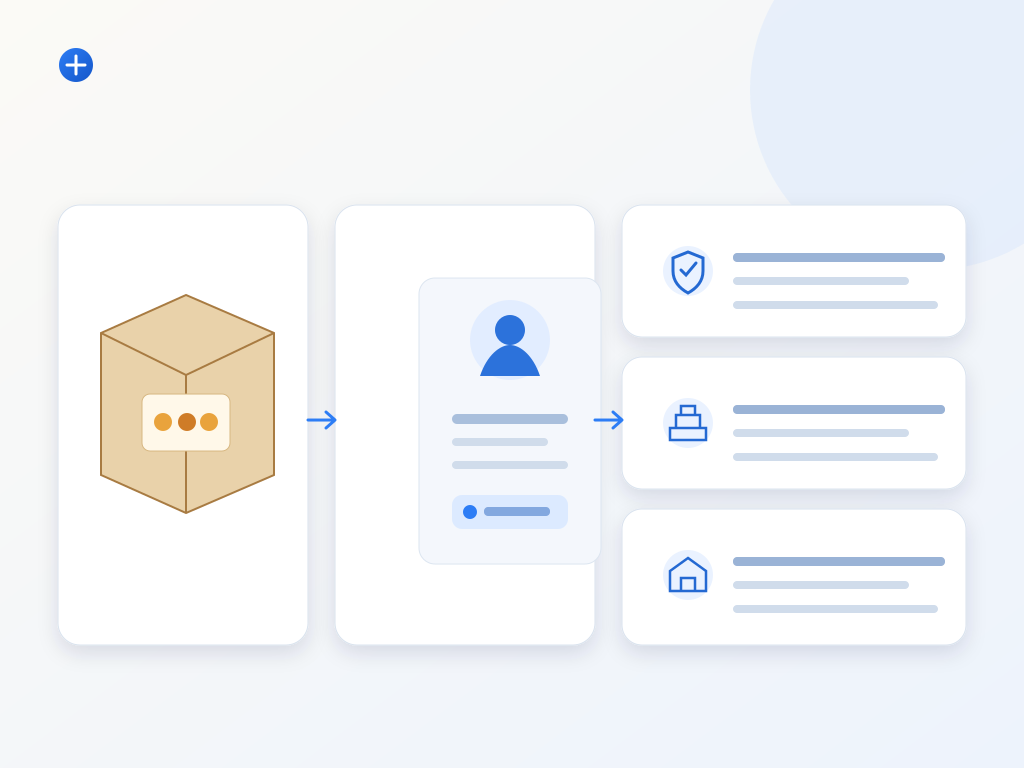
Start with the buyer's actual role
Ask the contact to describe the business model in plain language. Does the company buy and resell the food, distribute it for another brand, act as a broker, represent a retailer, arrange customs entry, or introduce the exporter to another buyer? These roles can overlap, but they are not interchangeable. The entity that requests a quotation may not be the entity that signs the purchase order or takes ownership of the goods.
For FDA's Foreign Supplier Verification Program, the importer is generally the U.S. owner or consignee of the food at the time of entry. If there is no U.S. owner or consignee at that time, the importer can be the U.S. agent or representative of the foreign owner or consignee, confirmed by a signed statement of consent. FDA's current Import Alert 99-41 also states that the FSVP importer may or may not be the importer of record. Do not assume that a customs broker, freight forwarder or person filing an entry is automatically the FSVP importer. Ask the buyer to identify the responsible party and confirm the arrangement with its qualified compliance contact.
Role questions to ask
- Which legal entity will sign the purchase order and pay the invoice?
- Will the company own or purchase the food at the time of U.S. entry?
- Is it the distributor, retailer, broker, buying agent or another intermediary?
- Who will be identified as the FSVP importer for this food and foreign supplier?
- Which customs broker or filer will handle entry and Prior Notice coordination?
- If another company owns the goods, can the buyer explain the contractual and import arrangement?
Verify the legal business and the people behind the enquiry
Record the exact legal name, trading name, state or jurisdiction of registration, business address, website, main telephone number and the contact's role. Compare those details with the email domain, quotation request, purchase-order draft, invoice instructions and any public business record available for the relevant U.S. state. A registered office, warehouse, sales office and food facility can be different addresses; ask what each address represents instead of treating every difference as evidence of wrongdoing.
Check that the person communicating with you has a plausible connection to the company and authority for the next step. Use a contact route independently found on the company's official website or a reliable public record when confirming material changes. A professional-looking website, social profile, business registration or email signature is one piece of evidence, not proof of purchasing authority or ability to pay. Keep the source and the date checked beside each important claim.
Identity evidence to record
- Legal entity and any trading name, with the relationship explained
- Business registration jurisdiction and current status where publicly searchable
- Official domain, telephone and business address
- Contact name, role and independently supported company connection
- Contracting entity, invoice payer and proposed bank beneficiary
- Any mismatch, missing record or detail that still needs direct confirmation
Test product and channel fit before building a large quote
A food importer can be genuine and still be the wrong buyer for your product. Compare the product type, ingredients, format, price position, shelf-life, storage needs, packaging, case configuration and minimum order against the buyer's actual channel. A distributor serving ethnic grocery stores may evaluate a savoury snack differently from a broadline food-service distributor, an ingredient importer or a national retail buyer.
Ask where the product would be sold, which pack sizes and case quantities are relevant, what price basis the buyer needs, and whether it expects an existing brand or private label. Clarify the expected first order, repeat-order potential, delivery point, target launch date and the documents required for an initial review. Treat estimated annual volume as an estimate until the buyer supplies a basis for it.
Commercial fit questions
- Which product category, flavour, grade or pack format is the buyer considering?
- Which retail, food-service, wholesale or ingredient channel does it serve?
- What first-order quantity, case pack and delivery location are realistic?
- Does the buyer require private label, exclusive territory or a specific brand format?
- What shelf-life remaining at arrival does the buyer require?
- What price basis, currency, Incoterm and launch timing should the quote use?
Clarify who is responsible for FSVP and supplier verification
FDA's FSVP rule requires covered importers to use a risk-based process to verify that imported food is produced to the applicable U.S. food-safety requirements and is not adulterated or misbranded for relevant allergen-labelling purposes. The importer evaluates food hazards and supplier performance, approves foreign suppliers as appropriate, chooses verification activities and keeps the required records. Exemptions and modified requirements exist, and product categories can fall under different regulatory regimes, so the buyer should confirm the rule that applies to the actual food.
A serious importer may ask for a product description, ingredient and allergen information, process flow, hazard analysis or food-safety records, audit reports, testing or certificates of analysis. The exact request depends on the food and the risk assessment. Ask which records are required, who will review them, how confidential information will be protected and whether a qualified FSVP professional or regulatory adviser is involved. Do not claim that an exporter has completed the buyer's FSVP merely because it supplied documents.
Questions for the buyer's compliance contact
- Who is the named FSVP importer for this food and foreign supplier?
- Which hazard, supplier and verification records are needed before approval?
- Does the buyer need an audit, sampling, testing or a review of existing records?
- What product, facility and supplier identifiers must appear in the import data?
- Who will approve the label and any market-specific claims?
- What is the secure route for exchanging confidential food-safety records?
Do not confuse facility registration, FSVP and Prior Notice
Food-facility registration and FSVP are separate controls. Facilities that manufacture, process, pack or hold food for U.S. consumption generally must register with FDA unless an exemption applies. A foreign facility that is required to register must have the appropriate U.S. agent arrangement. FDA says registration information is confidential and not publicly available, so an exporter should not expect to independently search a public list of registered facilities. Do not share FIS-FURLS passwords or PINs. A downstream commercial entity submitting Prior Notice may need the facility's registration number for that filing, so agree a secure, limited-purpose route if it is required.
FDA says it does not certify, license or otherwise approve individual food importers, products, labels or shipments before importation, and it does not issue a food-facility registration certificate. Its 2026 reminder states that FDA registration and renewal carry no FDA fee, although a U.S. agent or private service may charge for its own work. As of 6 November 2026, the current biennial renewal period for facilities that are required to register runs from 1 October through 31 December 2026. Check the official FDA process and exemptions rather than relying on a private certificate or an unsolicited renewal invoice.
Prior Notice is a separate shipment-specific notification for food offered for import, unless an exemption applies. It is normally coordinated by a person with the required shipment information, which can include an exporter, importer, broker or filer. FDA's confirmation that a Prior Notice submission is facially complete is not a finding that the food is admissible, approved or free from inspection. Agree who will prepare and confirm it before dispatch, and re-check the current rule for the transport mode and product.
Keep the three controls separate
- Facility registration: whether the relevant manufacturing, processing, packing or holding facility must register
- FSVP: which U.S. party is responsible for the applicable foreign-supplier verification program
- Prior Notice: who will submit and confirm the required notice for the specific shipment
- Product-specific rules: whether another agency, exemption or additional filing applies
- Evidence: the official record or written confirmation that supports each conclusion
Use regulatory alerts as narrow risk signals, not a buyer score
FDA publishes import alerts that can identify products, manufacturers or importers subject to specific enforcement or detention policies. Import Alert 99-41, published in its current form on 3 November 2026, is titled for detention without physical examination of human and animal foods imported from foreign suppliers by importers who are not in compliance with FSVP. Its guidance is tied to importers and the foods identified on the Red List, and it does not apply to foods covered by the listed FSVP exemptions. If a named company, supplier or product appears in an alert, compare the exact legal entity, food, foreign supplier, current Red List status and applicable guidance with a qualified adviser before drawing a conclusion.
The absence of a company from an import alert is not a clean bill of health, and an alert should not be used to label a business fraudulent. Alerts can change, and a match may involve a different entity or product. Record what the official source says, when it was checked and what remains uncertain. Use the alert as one input in a broader risk review, not as a substitute for identity, product and transaction checks.
A careful screening record
- Official alert or enforcement source and date checked
- Exact company, facility, product and country match, if any
- Scope and current status of the alert
- What the source confirms versus what it does not establish
- Questions for the buyer, importer or qualified regulatory adviser
Agree sample, payment and first-order terms before dispatch
A sample request is a commercial commitment even when the quantity is small. Confirm the exact sample product, formulation or variant, pack size, declared value where required, intended use, delivery address, recipient, shipping payer and expected evaluation date. Ask whether the sample is for internal review, laboratory testing, trade-show display or resale. FDA's Prior Notice guidance includes many food samples within its scope unless an exemption applies, so do not assume that a sample parcel is automatically outside import requirements.
For the first order, reconcile the buyer's legal entity, purchase order, invoice payer, delivery party, product specification, quantity, currency, Incoterm, payment schedule, inspection or testing requirements and responsibility for rejected goods. If the buyer asks for open-account terms, evaluate credit exposure separately rather than treating a company profile as credit approval. Any bank-beneficiary change should be verified through a trusted, independently sourced channel.
Before releasing a sample or first order
- Sample purpose, quantity, packaging and recipient agreed in writing
- Required product and shipment documents identified
- Import and Prior Notice responsibilities assigned
- Purchase-order, invoice and delivery entities reconciled
- Payment terms and beneficiary checked under your finance controls
- Open label, food-safety or regulatory questions assigned to a qualified owner
Make a go, clarify or hold decision
A useful qualification result is not a single score. It is a decision with evidence and unresolved questions. Use go when the legal counterparty, buyer role, product fit, import responsibilities and commercial terms are sufficiently clear for the next controlled step. Use clarify when the opportunity looks plausible but a material fact—such as the FSVP importer, first-order quantity, label owner or payment entity—has not been confirmed. Use hold when the buyer refuses to identify the contracting entity, asks for false product or origin claims, requests payment to an unexplained third party, or pressures you to dispatch before critical responsibilities are assigned.
Keep the decision reversible. A new product, destination, ownership arrangement or label can change the regulatory analysis. Record who approved the next step, what evidence was used and which conditions must be closed before a commercial commitment. Do not turn an unknown into a positive finding just to keep a lead in the pipeline.
Decision summary
- GO: identity, role, product fit, import responsibilities and first-step terms are supported
- CLARIFY: the buyer may fit, but one or more material facts need written evidence
- HOLD: an important identity, regulatory, payment or document concern remains unresolved
- RECHECK: a changed product, facility, owner, destination or shipment requires a fresh review
Worked example: an Indian savoury-snack enquiry
Illustrative example only: an Indian exporter receives an enquiry from a U.S. company for a shelf-stable savoury snack. The contact describes itself as an importer and requests a catalogue and sample cartons. The exporter first verifies the company's legal name, official domain, business address and the contact's role. It asks whether the company will buy and own the goods at entry or act as a distributor for another entity, and asks the buyer to identify the FSVP importer and customs filer for the proposed transaction.
The exporter then sends a controlled product brief with the actual ingredients, allergen information, pack format, shelf-life basis and available food-safety evidence. The buyer identifies its target retail channel, case configuration and required label review. The parties agree who will handle the import notice, how the sample will be declared and shipped, and which terms will govern a first order. If the buyer cannot identify the contracting entity or import-responsibility owner, the exporter keeps the opportunity at clarify rather than treating the sample request as proof of a qualified order.
Use Needo to organize the importer check
Needo can help research a named business, compare public identity and contact evidence, organize the buyer's stated role, and turn the product and transaction details into a structured list of checks. Give it the company name, website, contact, product, target channel, destination, proposed order and any documents the buyer supplied. Ask it to separate confirmed public facts, buyer statements, conflicting evidence and questions that require written confirmation.
Needo does not certify an importer, access confidential FDA registration records, decide legal FSVP coverage, file Prior Notice or guarantee that a shipment will be admitted. Have a qualified food-safety, regulatory or customs professional review the product and route before shipment. The useful outcome is a better-qualified commercial opportunity and a clear record of what must happen next.
Sources and further reading
- FDA — Foreign Supplier Verification Programs (FSVP) for Importers
Official rule overview covering the FSVP importer definition, risk-based foreign-supplier verification, supplier approval and relevant exemptions.
- FDA — FSVP Rule at a Glance
Concise FDA explanation of who is the FSVP importer and the responsibilities that generally apply unless an exemption or modified requirement is available.
- FDA — Importing Human Foods
Explains facility-registration requirements and that food-facility registration information is not publicly available.
- FDA — 2026 Food Facility Biennial Renewal Reminder
FDA's 29 September 2026 update states that required facilities must renew during the 1 October–31 December 2026 window.
- FDA — Food Facility Registration Fees and Private Registrars
FDA states there is no FDA fee to register or renew a food facility and that it does not issue a food-facility registration certificate or endorse private registrars.
- FDA — Prior Notice of Imported Foods
Current FDA overview of shipment-specific Prior Notice, submission systems, exemptions and the distinction between a notice confirmation and admissibility.
- FDA — Import Alert 99-41
Specific FDA alert concerning detention of certain foods from foreign suppliers by importers not in FSVP compliance; use only after checking the exact scope and current status.
- U.S. Department of Commerce — Perform Due Diligence
Official guidance on preliminary checks of foreign firms, business addresses, contacts and warning signals; not a substitute for full due diligence.
Sources support the specific points noted above. Confirm current requirements for your product, destination and contract before committing.
Need the actual problem solved?
This guide explains the method. Needo can work from your specific requirement, compare relevant options, verify important details and help move the next step forward.
Start with your exact problem →Selling or exporting? See live buyer requirements by product · see a sample verified shortlist