NEEDО · IMPORT & EXPORT COMPLIANCE
How to Check Preferential Origin Evidence Before Claiming Lower Import Duty
A certificate or origin statement does not make a product originate in a country by itself. Preferential tariff treatment depends on the specific trade agreement, the product's rule of origin, the materials and processing used, and the proof required for the shipment. Before an exporter claims a reduced duty rate—or an importer relies on that claim—build an evidence file that another reviewer can reproduce.
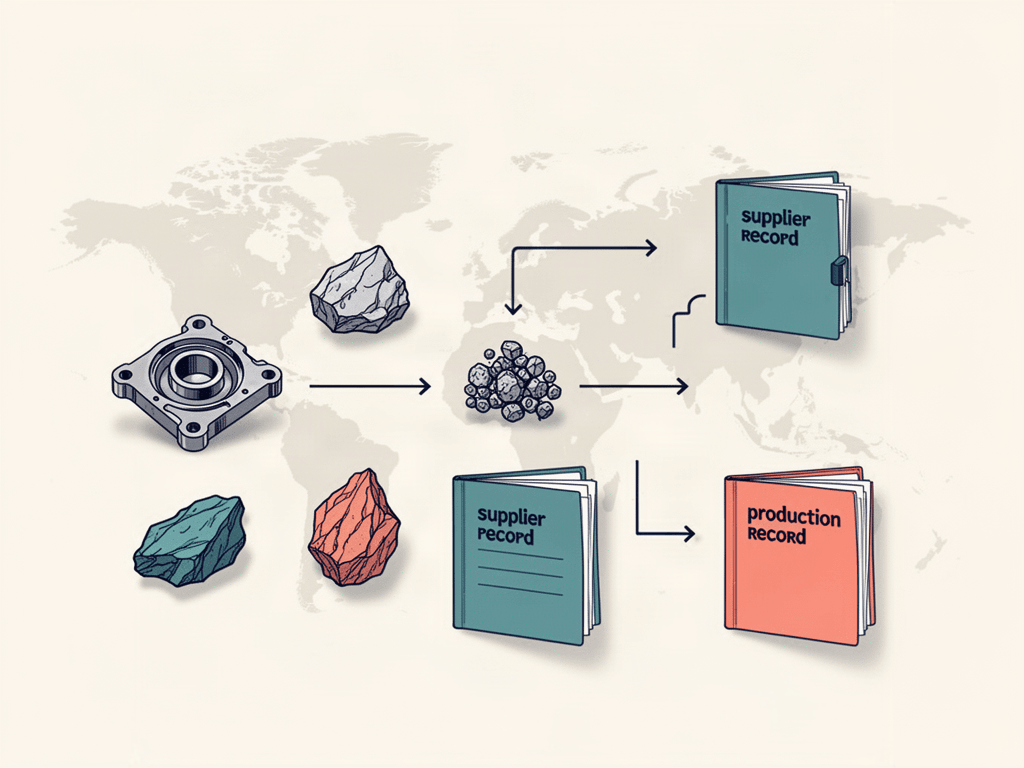
Separate country of dispatch, non-preferential origin and preferential origin
The country from which goods are shipped is not automatically their country of origin. Goods can be dispatched from a trading hub, stored in a third country or sold by a company located somewhere other than where the product was made. Non-preferential origin is used for purposes such as origin marking, trade measures or statistics under the applicable law. Preferential origin is a separate test under a particular trade agreement or preference scheme and determines whether a qualifying product can receive the agreement's reduced or zero tariff treatment.
A non-preferential certificate of origin may identify the country of origin without establishing eligibility for a preferential rate. Conversely, some agreements permit an origin declaration on a commercial document or importer knowledge instead of a chamber-issued certificate. The correct document and test depend on the agreement, product and importing country.
Write down the exact transaction
- Exporting country and importing customs territory.
- Shipment date and intended customs procedure.
- Trade agreement or preference scheme being relied on.
- Product description, model and current tariff classification in the importing market.
- Whether the question concerns non-preferential origin, preferential origin, marking or another origin rule.
Find the agreement and product-specific rule before preparing a certificate
First confirm that a trade agreement or preference scheme actually applies to the countries and goods in the transaction. Then open the agreement's current rules-of-origin protocol, product-specific rules and proof-of-origin provisions. Do not begin by downloading a generic certificate template: the agreement may require an origin declaration, a prescribed certificate, a supplier declaration, importer knowledge or a self-certification route.
The tariff classification is often the key that locates the product-specific rule. If the HS or national tariff code is uncertain, resolve that classification question with the relevant schedule and authority before treating an origin-rule result as settled. A code copied from an old shipment or a supplier invoice can send the exporter to the wrong product rule.
Research sequence
- Confirm the agreement is in force for the origin and destination on the shipment date.
- Check the product's current tariff classification in the importing market.
- Find the product-specific rule and any relevant general rules, cumulation provisions or exceptions.
- Identify the proof-of-origin method accepted by that agreement.
- Save the official agreement, tariff reference, version and date checked.
Apply the actual origin rule to the product and its materials
Agreements use different tests. A product may qualify because it is wholly obtained in a party, because non-originating materials undergo a required change in tariff classification, because a regional-value threshold is met, because a specified manufacturing process is performed, or through a combination of conditions. The wording and calculation method are agreement-specific. A general statement that a product is substantially transformed is not enough unless that is the test the relevant rule actually uses.
Map each material and component to its supplier, country of origin, tariff classification and value or weight where the rule requires it. Then map the manufacturing steps performed in the exporting country. If the rule requires a tariff shift, compare the relevant material and finished-product classifications. If it requires a value calculation, use the agreement's defined formula, valuation basis, currency and exclusions. Do not substitute a generic percentage calculation for the agreement's own method.
If a product contains both originating and non-originating inputs, identify which materials qualify, which do not and which still need evidence. Cumulation may allow qualifying materials or processing from another agreement party to count, but only when the agreement and the facts permit it.
Build a product-origin matrix
- Finished product, model, bill-of-materials revision and tariff classification.
- Each material or component, supplier and country of origin.
- Supplier declaration or other evidence supporting each material's status.
- Material tariff classification, value or weight when required by the product rule.
- Manufacturing or processing step performed in each country.
- The exact product-specific rule and how each condition is met or remains unproven.
Collect evidence that supports the claim—not just the final document
Keep records that show why the product meets the applicable rule. Depending on the agreement and product, this may include bills of materials, supplier declarations, purchase invoices, production records, process descriptions, cost or accounting records, weight calculations, manufacturing orders, inventory records and traceability to the exported batch. The evidence should identify the actual product and revision, not merely a similar item from the same supplier.
An exporter that issues an origin statement may be asked later to demonstrate that the goods qualified. The UK guidance for trade with the EU, for example, says exporters must hold evidence of originating status before issuing a statement on origin and may need supplier declarations or other supporting records. HMRC lists production records, invoices, accounting details and supplier declarations as examples of evidence. The retention period and evidence list must be checked for the agreement and jurisdiction that actually apply.
Evidence-quality checks
- The supplier declaration covers the right product, materials, period and agreement where those details are required.
- Invoices and production records can be traced to the exported goods or batch.
- The bill of materials and manufacturing process match the current product revision.
- Values, weights, currencies and calculation periods use the agreement's defined method.
- Originating and non-originating materials are clearly separated.
- Missing or confidential evidence is recorded as a gap rather than silently assumed.
Choose the proof route the agreement actually allows
Proof can take different forms: a certificate issued by an authorized body, an origin declaration or statement on origin made by an exporter, a supplier declaration supporting a later claim, or importer knowledge where the agreement permits it. Some agreements use self-certification, and the person making the declaration must understand and accept the responsibilities specified by that agreement. A chamber-issued non-preferential certificate is not a substitute for a preferential proof route when the agreement requires something else.
Singapore Customs explains that selected free-trade agreements use self-certification and that the origin declaration must contain the data elements prescribed by the specific agreement. Its guidance also makes clear that the entity issuing the declaration carries responsibility for understanding and meeting the relevant rules. The EU's proof-of-origin guidance describes several methods, including origin statements and supplier declarations, with eligibility conditions that depend on the scheme.
Before requesting or issuing proof
- Confirm the agreement accepts the proposed document or declaration type.
- Check who is authorized to issue it: exporter, producer, importer or designated body.
- Use the prescribed wording, data elements, signature or registration details where required.
- Check shipment-value thresholds, validity periods, invoice references and any approved-exporter or registered-exporter conditions.
- Confirm whether the importer must hold the original, electronic record or supporting evidence.
- Do not describe a draft, application or unverified supplier statement as an issued certificate.
Check transport and third-country handling conditions
Some agreements impose direct-transport, non-alteration or customs-supervision conditions when goods travel through a third country. The details vary: an agreement may permit storage, splitting or transshipment if specified conditions and evidence are met, while another may require proof that the goods remained under customs control and were not processed beyond permitted operations.
Retain the route, transport documents, warehouse or customs-supervision records and any other evidence the applicable rule requires. Do not assume that a through bill of lading alone proves every condition. Check the agreement's wording and the importing customs authority's current instructions for the route.
Route evidence to review
- Transport route, transit countries and dates.
- Bills of lading, air waybills or other transport records.
- Warehouse, customs-supervision or non-manipulation evidence where required.
- Any splitting, repacking, relabelling or handling performed in a third country.
- Evidence that the goods meet the agreement's direct-transport or non-alteration condition.
Worked example: an assembled product with imported components
Illustrative example only: an exporter assembles an electrical control unit in Country A using a locally made housing, an imported circuit board, imported connectors and locally sourced wiring. The exporter wants the importer in Country B to claim a preferential tariff under a trade agreement. The first step is not to request a certificate. It is to identify the finished product's correct tariff classification and read the agreement's product-specific rule.
If the rule requires a change in tariff classification, the exporter must compare the classifications of the non-originating materials with the finished product at the level specified by the rule. If the rule instead uses a regional-value calculation, the exporter must collect the required values and apply the agreement's formula. The local housing and wiring do not automatically make the finished unit originating; the imported circuit board and connectors do not automatically disqualify it. The actual result depends on the rule and evidence.
The exporter should retain the current bill of materials, supplier declarations, purchase invoices, production records and batch traceability, then use the proof method the agreement allows. If a material supplier cannot provide the required evidence, mark the claim as unresolved and obtain advice before issuing an origin statement. No conclusion about the fictional product's origin is made here.
The review decision
- Agreement and product-specific rule identified from official sources.
- Finished-product classification checked for the importing market.
- Every relevant material mapped to origin evidence and the rule's calculation.
- Production and transport records linked to the exported batch.
- Proof route, issuer and required wording confirmed.
- Open evidence gaps escalated before any preferential claim is made.
Avoid the common origin-claim mistakes
Origin errors often begin with a shortcut: treating the dispatch country as origin, copying the supplier's statement, using a non-preferential certificate for a preferential claim, or applying a product rule from the wrong agreement or tariff code. Another frequent mistake is keeping the certificate but not the production, supplier or accounting evidence that supports the declaration. A document can be authentic and still be incorrect for the product or transaction.
- Do not equate country of shipment, seller address and product origin.
- Do not assume every certificate of origin gives preferential tariff treatment.
- Do not apply a generic substantial-transformation test when the agreement defines another rule.
- Do not reuse an old supplier declaration for a different product revision or period.
- Do not calculate regional value using a formula from another agreement.
- Do not claim preference while required evidence or transport conditions remain unresolved.
Use Needo to organize the preferential-origin evidence file
Give Needo the origin and destination countries, agreement, product description, current tariff reference, bill of materials, supplier declarations, production steps and shipment route. It can organize the product-specific rule, map each requirement to available evidence, identify missing records, compare proof routes and prepare questions for the exporter, importer or customs broker. Ask it to cite the official agreement and distinguish a documented fact from a supplier claim or an unresolved assumption.
Only the authorized exporter, importer, issuing body or customs authority can make or determine the declaration under the applicable rules. Needo does not certify origin, issue a certificate, guarantee preferential treatment or replace a customs ruling. The useful outcome is a traceable evidence pack and a clear decision about what must be confirmed before anyone claims a reduced duty rate.
Sources and further reading
- HM Revenue & Customs — Get Proof of Origin for Your Goods
Explains that proof depends on the goods and destination agreement and lists production records, invoices, accounting details and supplier declarations as supporting evidence in the UK context.
- HM Revenue & Customs — Proving Originating Status and Claiming a Reduced Rate for UK–EU Trade
Agreement-specific guidance on evidence held by exporters, supplier declarations, statements on origin and the consequences of an unsupported claim.
- Singapore Customs — Origin Documentation Overview
Updated 25 March 2026; distinguishes preferential and non-preferential origin documents and explains that the proof method depends on the applicable free-trade agreement.
- Singapore Customs — Self-Certification
Updated 2 March 2026; describes selected agreements that allow exporters, producers or importers to make origin declarations under agreement-specific requirements.
- European Commission — Proof of Origin
EU guidance on origin statements, supplier declarations and the conditions under which different proof methods may be used.
Sources support the specific points noted above. Confirm current requirements for your product, destination and contract before committing.
Need the actual problem solved?
This guide explains the method. Needo can work from your specific requirement, compare relevant options, verify important details and help move the next step forward.
Start with your exact problem →Selling or exporting? See live buyer requirements by product · see a sample verified shortlist