NEEDО · SOURCING & RFQ
Product Specification Sheet Template for Supplier RFQs: What to Include
A supplier can only quote the requirement it can understand. If the product brief leaves material, dimensions, tolerances, packaging or acceptance criteria open, different suppliers may price different products and their quotes will not be comparable. A useful specification sheet is a controlled reference for the item you actually need—not a marketing description and not a promise that any supplier can manufacture it.
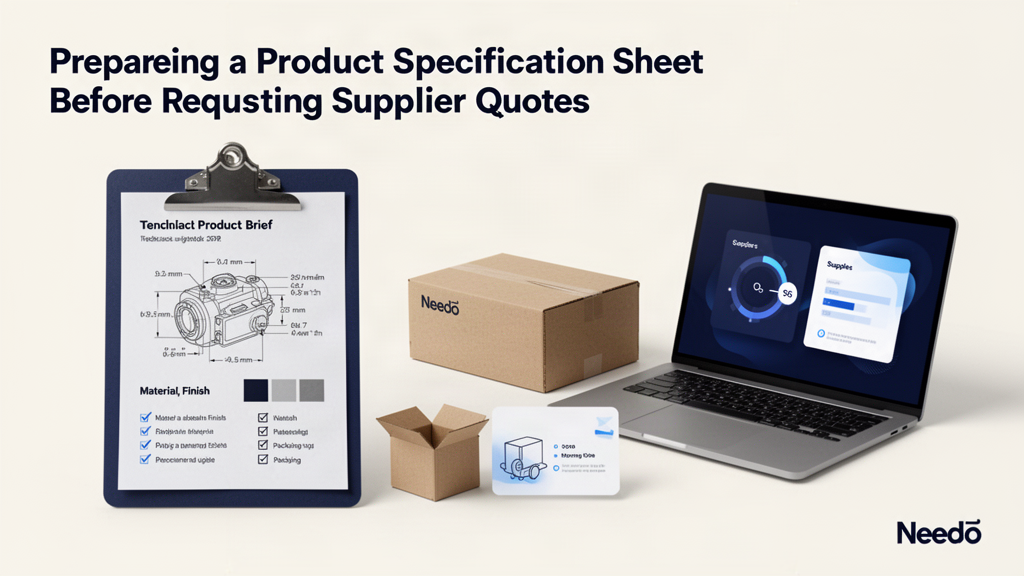
Start with the intended use and the non-negotiables
Describe what the product must do, where it will be used and what failure would look like. The intended use helps the supplier understand why a feature matters; the measurable requirement tells the supplier how you will judge whether the product meets it. Separate essential requirements from preferences so the sheet does not turn every nice-to-have into a costly pass-or-fail condition.
Ask the people who will use, inspect and approve the product to review the brief before it goes to suppliers. A buyer may know the commercial goal while an engineer, installer or quality reviewer knows the operating conditions and failure modes. For regulated, safety-critical or technically complex goods, obtain competent technical and regulatory review instead of using a generic template as a substitute.
Define the decision-critical inputs
- Intended application and operating environment
- Must-have function and measurable performance
- Mandatory requirements versus negotiable preferences
- Target order quantity and expected repeat volume
- Destination market and known compliance constraints
- Who approves the specification and sample
Identify the exact product and control revisions
Give the item a clear name and internal reference. Add the drawing, photo, sample identifier, model, version and date where applicable. If you are sourcing from a sample or image, record what is known and what still needs measurement; a photo alone rarely proves hidden dimensions, material grade, internal construction or compatibility.
Use a revision field and a short change log. If the material, drawing or tolerance changes after suppliers quote, send the same revised version to every supplier still being compared and ask them to confirm the effect on price and lead time. Do not combine comments from different versions into one ambiguous final file.
Identity and revision fields
- Product name, buyer reference and intended use
- Drawing or image filename and revision
- Reference sample number, if one exists
- Issue date and owner of the specification
- Change summary and superseded version
- Open questions that require supplier confirmation
Specify materials, dimensions and tolerances
State material grade or acceptable material alternatives, dimensions, units, finish, colour, weight and critical interfaces where relevant. Use a drawing or numbered table for complex geometry. A tolerance explains the permitted variation; it should be chosen from the actual function and engineering requirement, not copied from another product because it looks precise.
Avoid vague words such as premium, heavy duty, food grade or industrial quality unless they are accompanied by a defined standard, test or measurable criterion appropriate to the product. If you do not know the required value, label it as an engineering decision or ask the supplier what options exist. Do not let a supplier silently choose a substitute for a mandatory material or component.
Useful fields when applicable
- Material and grade, including acceptable substitutes
- Dimensions, units and tolerance limits
- Colour, surface finish and visible-defect standard
- Electrical, mechanical or chemical performance
- Fit, interface and compatibility requirements
- Drawing references and measurement method
Describe quality checks and evidence before production
Tell suppliers how conformity will be evaluated. Depending on the product, this may mean visual inspection, dimensional measurement, functional testing, laboratory reports, certificates or a sample reviewed against an agreed reference. Name the required evidence and who will review it, but do not demand a test or certificate unless it is relevant and can be assessed for the product and destination.
A supplier statement, a sample, a certificate and an independent inspection are different kinds of evidence. Decide which is sufficient for each critical requirement. For a material order, agree how a non-conforming batch will be identified and handled before production rather than trying to invent acceptance rules after goods arrive.
Quality and compliance section
- Critical characteristics and how they will be measured
- Required test method or standard, if confirmed
- Documents and certificates actually required
- Sample approval and production-start gate
- Inspection stage, sampling plan or independent review if needed
- Non-conformance reporting and corrective-action expectations
Include packaging, labelling and delivery constraints
Packaging can affect product damage, shelf life, storage, handling, retail readiness and freight cost. Specify the inner and outer packaging, protection, label content, language, barcode or carton markings when required. Include carton dimensions, gross weight, pallet or handling needs when they affect transport or warehouse planning.
State the destination, delivery window and any known shipping constraints that influence the product or packaging. Keep product requirements separate from commercial delivery terms so a supplier can identify which part of the quote covers manufacture and which part covers packing, freight or other services. Confirm market-specific labelling and import requirements with the appropriate authority or qualified adviser.
Packaging and logistics fields
- Unit, inner and outer packaging
- Protective materials and handling requirements
- Label, language, barcode and carton-marking instructions
- Carton dimensions, gross weight and pallet requirements
- Destination and required arrival or dispatch window
- Responsibilities and costs that are included or excluded from the quote
Make the quotation basis identical for every supplier
A specification sheet should give suppliers a common basis to quote, but the RFQ still needs the commercial quantities and response format. Ask each supplier to price the same specification at the same quantity tiers and to disclose MOQ, sample cost, tooling or setup, lead time, payment terms, delivery basis, packaging assumptions and exclusions. If an alternative is offered, require it to be identified separately rather than quietly substituting it into the main price.
For a private-label item, clarify ownership and handling of artwork, moulds, tooling, files and approved samples. For a component, clarify whether the price includes testing, assembly or required accessories. If the supplier cannot quote a field, ask it to mark the field as excluded or pending and explain why. That makes the gap visible in the comparison instead of disguising it as a cheaper offer.
Commercial response fields
- MOQ and price at each requested quantity
- Sample, tooling, setup and testing charges
- Lead time and the event that starts the clock
- Delivery basis, named place and included charges
- Payment terms, quote validity and currency
- Exceptions, substitutions, exclusions and assumptions
Example: turn a vague request into a quoteable requirement
Weak request: 'Quote a durable metal bracket for industrial use.' Suppliers could reasonably interpret the material, dimensions, load, coating, hole positions, packaging and inspection standard differently. A lower quote might simply be for a different bracket.
Better starting point: identify the drawing revision; state the material and finish if confirmed; list the critical dimensions and tolerances; define the load or test requirement with the responsible engineer; specify the quantity tiers and packaging; and ask suppliers to list all exceptions. This is an illustrative structure, not a real product specification. The actual values must come from the product owner or qualified technical source.
Quick review before sending
- Can two suppliers quote the same item without guessing?
- Can each mandatory requirement be checked objectively?
- Are unknown technical values explicitly marked for confirmation?
- Are all suppliers receiving the same version and attachments?
- Are alternatives, exclusions and extra costs shown separately?
- Is there an identified person who can approve samples and changes?
Copy-ready specification sheet outline
Use this outline as a starting point and remove fields that do not apply. Add drawings, test protocols or regulatory schedules when the product requires them. A concise, controlled document is more useful than a long form full of irrelevant fields.
Public-sector specification guidance is a useful model for clarity and objective evaluation, but its formal procurement rules do not automatically govern a private commercial purchase. Adapt the level of detail to product complexity, risk and the supplier relationship.
Template fields
- 1. Product identity, purpose, reference and revision
- 2. Scope, quantity and required delivery window
- 3. Materials, dimensions, tolerances and performance
- 4. Finish, colour, compatibility and approved alternatives
- 5. Quality checks, tests, certificates and acceptance criteria
- 6. Packaging, labelling, carton data and destination
- 7. Sample approval, inspection and change control
- 8. MOQ, quantity tiers, lead time and commercial response format
- 9. Required documents, exclusions and supplier assumptions
- 10. Open questions, approver and date of approval
Use the specification through sampling and ordering
Keep the approved specification attached to the RFQ, quote comparison, sample approval and purchase order. Before placing the order, reconcile the selected supplier's quote and PO against the same revision. If a supplier proposes a change, assess it explicitly and update the controlled document only after the right person approves it.
Needo can organize your product notes and references into a structured draft, identify missing fields, prepare supplier questions and help compare responses. The draft still needs your technical review; it should never invent a tolerance, certification, material grade or legal requirement to make the document appear complete.
Sources and further reading
- Northern Ireland Department of Finance — Template for Writing a Specification
Official template and drafting guidance for defining requirements clearly enough for suppliers to propose appropriate goods or services.
- New Zealand Government Procurement — Documenting Your Requirements
Explains how clear, concise requirements help suppliers understand the need and support a more consistent evaluation.
- Buying for Victoria — Specification Writing Guide
Public procurement guidance on structuring requirements and numbering specifications so responses can be assessed consistently.
Sources support the specific points noted above. Confirm current requirements for your product, destination and contract before committing.
Need the actual problem solved?
This guide explains the method. Needo can work from your specific requirement, compare relevant options, verify important details and help move the next step forward.
Start with your exact problem →Selling or exporting? See live buyer requirements by product · see a sample verified shortlist