NEEDО · PROCUREMENT OPERATIONS
Vendor Onboarding Checklist: What to Complete Before the First Purchase Order
Supplier onboarding begins after a candidate is selected and turns that decision into a supplier record that the business can safely order from, receive from and pay. It is more than collecting a form. The work usually spans procurement, the requesting team, finance, quality, operations and sometimes legal or compliance. A useful checklist makes each required control visible, assigns an owner and stores the evidence so a first purchase order does not expose gaps that could have been resolved earlier.
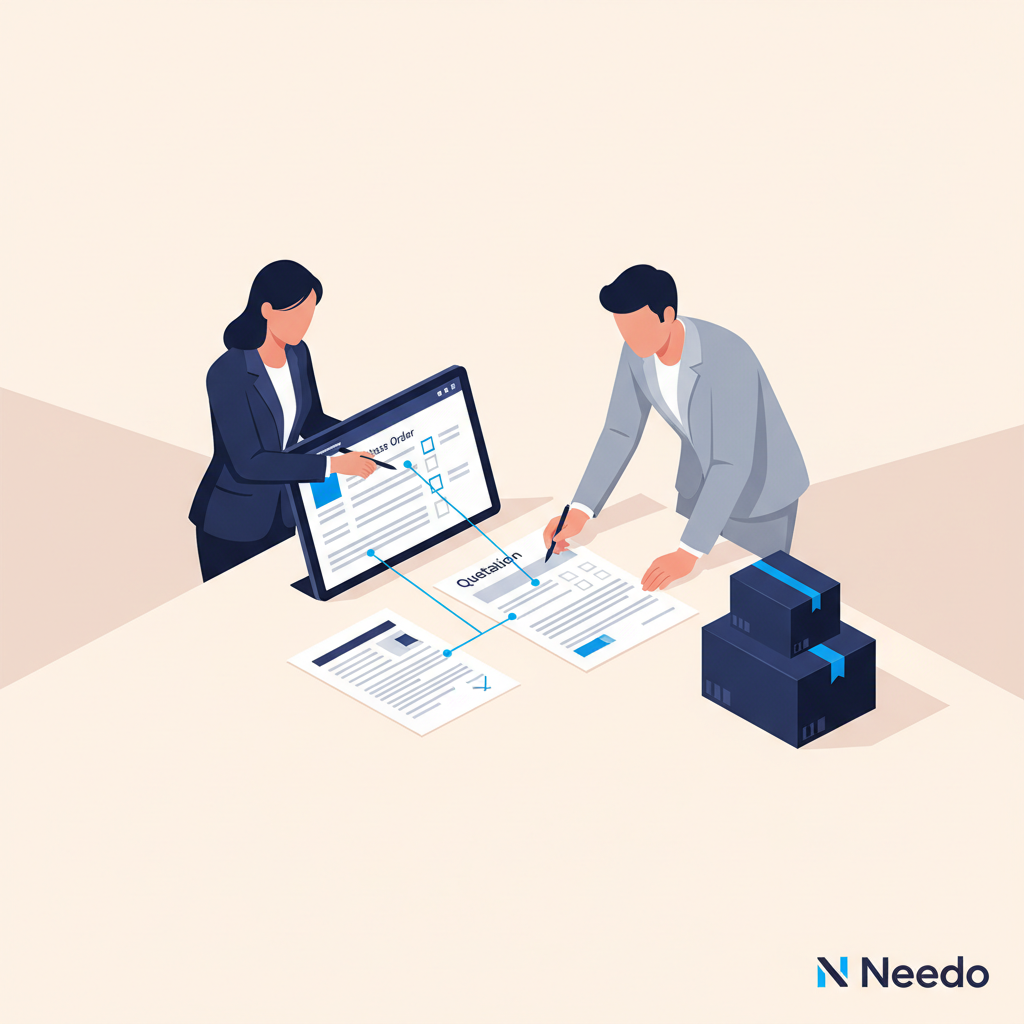
Define the owner, scope and risk tier
Start by recording why the supplier is needed, what will be purchased, who owns the business relationship, the expected spend or order exposure, the delivery location and whether the supplier will handle sensitive data, regulated goods or a critical production input. Use your own policy to set the level of review. A one-time low-risk purchase may need a lighter process than a sole-source supplier supporting a production line, but any required legal, payment or safety control still applies.
Name one onboarding coordinator and assign each approval to the function that owns it. The business requester explains the need, procurement controls the sourcing and commercial process, finance validates payment setup, and quality, security, legal or compliance contribute when the risk requires them. A task without an owner or evidence requirement is easy to leave incomplete.
Intake fields
- Business need, product or service and requesting owner
- Supplier legal name, country and operating site
- Order value, frequency, criticality and risk tier
- Required documents and approvals under your policy
- Onboarding coordinator, decision owner and target date
Verify the legal entity and required records
Collect the supplier's legal name, registered or trading address, registration identifiers where applicable, tax information required in the relevant jurisdiction, authorized contacts and the entity that will contract with you. Reconcile the details across the quotation, contract, invoice instructions and supplier master record. If the supplier uses a trading name, subsidiary or local distributor, document the relationship instead of silently treating the names as interchangeable.
Check important claims against independent sources where available and proportionate to the risk. A company profile or document supplied by the contact can help, but it does not independently establish every fact. The United Kingdom's international-trade guidance recommends vetting customers and suppliers and obtaining appropriate company records or references; other countries and industries may require different checks. Use your local policy and qualified advice for jurisdiction-specific obligations.
Identity and document checklist
- Legal entity and trading name reconciled
- Registration or tax details checked where required
- Contracting entity and authorized signatory identified
- Required licenses, insurance or certifications collected and checked for scope
- References or independent business evidence recorded where appropriate
- Missing or conflicting details assigned for resolution
Verify banking and payment instructions independently
Payment setup is a high-impact control because incorrect beneficiary data can redirect funds or delay a legitimate payment. Record the payee name, bank country, currency and account details through the approved finance process. Verify new or changed instructions through an independently sourced contact route or another control approved by finance. Do not rely only on a reply to the email that delivered the change, because the same communication channel may be compromised.
Make sure the payee is consistent with the contracting entity or that a legitimate, documented reason explains the difference. Agree payment terms, invoice requirements, currency, due dates, bank charges and dispute handling before the first order. For cross-border or material transactions, involve the bank or qualified trade-finance adviser when the payment instrument or documentary requirements need specialist review.
Payment controls
- Beneficiary identity matches the approved supplier or has a documented explanation
- Bank details verified through the approved independent procedure
- Any bank-detail change has a separate review and audit trail
- Payment terms, currency and due date approved
- Invoice submission route and required references confirmed
Complete contract and commercial approvals
Confirm the signed agreement, purchase terms or other approved contract form is in place before ordering when your policy requires it. Check the scope, specification, pricing basis, quantity assumptions, delivery terms, acceptance criteria, warranty or service levels, confidentiality and change process. For international goods, make the delivery term and named place explicit where applicable; do not assume a quote includes freight, insurance, duties or other charges unless the documents say so.
Use the appropriate review for the risk and value. A standard low-risk order may use an approved template, while a strategic, regulated or high-value relationship may need legal, tax, security or quality review. Onboarding should record the actual approval and version rather than a note that someone said the contract was fine. Do not create contractual rights or obligations by copying a generic checklist.
Commercial gate
- Approved quote and scope are version-controlled
- Contract or purchase terms are signed or otherwise approved as required
- Price, quantity, currency, delivery basis and payment terms reconcile
- Quality, acceptance, warranty and dispute terms are clear
- Required legal, finance and category approvals are recorded
Create accurate supplier and item records
Set up the supplier in the approved procurement or finance system using a consistent legal name, address, tax fields, payment terms, currency, contacts and remittance route. Check for duplicate supplier records before creating a new one; duplicates can split spend history, bypass controls or send invoices to the wrong record. Restrict editing of sensitive payment fields to authorized roles and retain the change history required by your process.
For goods or services, create or validate the item, service description, unit of measure, part number or SKU, specification revision, approved site, packaging, minimum order, lead time and required documents where those fields apply. The purchase order must point to the right supplier and the correct commercial and technical record. Mark unknown or not-applicable fields explicitly instead of filling them with guesses.
Master-data checklist
- Duplicate supplier search completed
- Legal and remittance data reviewed by authorized roles
- Tax and invoice fields completed where required
- Item, service, SKU, revision and unit of measure confirmed
- Approved site, lead time and order constraints recorded
- Change permissions and audit trail follow internal policy
Set delivery, quality and communication expectations
Before the first order, confirm who receives the purchase order, who acknowledges it, who owns technical questions and who handles delivery exceptions or invoice disputes. State the specification, required documents, packaging and labelling, delivery location, requested date, inspection or acceptance steps and how changes must be approved. If the supplier uses a subcontractor or separate shipping party, record the responsibility and evidence required for that arrangement.
For a quality-critical purchase, agree what evidence accompanies the first shipment and what happens if a sample, inspection or document fails. For a service, define the deliverable, acceptance criteria, access permissions, support route and completion evidence. Keep the controls proportionate to the actual purchase, but do not leave a critical requirement only in a conversation that the receiving or finance team cannot see.
Operating readiness
- PO acknowledgement contact and expected response route
- Delivery location, date and logistics responsibilities
- Quality, inspection, certificate or service-acceptance requirements
- Invoice routing, PO reference and dispute owner
- Escalation route for delays, defects or changed instructions
Run a first-order readiness gate
Before releasing the first purchase order, check that mandatory onboarding steps are complete and that the actual order matches the approved quote, contract, supplier record and specification. Compare quantity, unit of measure, price, currency, delivery basis, date, payment terms and ship-to details. A mismatch should return to the owner for resolution rather than being treated as a harmless administrative difference.
For a critical supplier, a first order may need an approved sample, pilot run, additional inspection, staged release or management sign-off. Those requirements should come from the product risk, contract and internal quality process. Record the gate result and the evidence used. If a control is not applicable, document why and who authorized that decision instead of leaving the field blank.
Go-live checklist
- Mandatory identity, payment and contract checks passed
- Supplier master record approved and usable
- PO matches the approved commercial and technical basis
- Required sample, pilot or inspection gate completed
- Delivery and invoice contacts confirmed
- Exceptions, waivers and approver recorded
Use the first transaction to check the setup
After the first receipt or service milestone, compare what arrived or was delivered with the purchase order and agreed acceptance criteria. Record quantity, quality, timing, documentation, invoice accuracy and any issue that required manual intervention. A successful onboarding form does not prove the supplier will perform well; the first transaction supplies new evidence about whether the setup and controls worked.
Resolve discrepancies through the normal receiving, quality and finance process, then update the supplier record where the evidence supports a change. Schedule a performance review for suppliers whose criticality or spend warrants it. Keep the onboarding file as the starting point for later supplier scorecards, corrective actions, renewals and second-source planning.
Post-first-order review
- Received quantity and condition reconciled with the PO
- Required documents and acceptance records received
- Invoice matches approved price, quantity and terms
- Exceptions and corrective actions assigned
- Supplier status and review cadence updated from evidence
A practical example: onboarding a new packaging supplier
Illustrative example: a manufacturer selects a new packaging supplier for a production run. Procurement records the legal entity, site, product specification, quantity, delivery date and owner. Finance independently verifies the beneficiary and approves the payment terms. The contract or approved order terms define the carton specification, artwork revision, acceptance checks and delivery basis. The master-data owner checks for duplicate supplier records and confirms the unit of measure and invoice route.
Before release, the buyer reconciles the purchase order against the approved quote, confirms the receiving team knows the inspection criteria and checks that any required sample approval is complete. If the bank name, artwork revision or delivery date conflicts with the approved record, the order is held for clarification. The example is illustrative; the exact controls depend on the product, jurisdiction, value and internal policy.
Use Needo to organize the onboarding workflow
Needo can turn your supplier documents, quotation, requirements and internal rules into a structured checklist with owners, evidence fields, open questions and a first-order gate. Give it the supplier's country, product or service, order exposure, payment proposal and the controls your organization requires. Ask it to distinguish verified records from claims, mark non-applicable items with reasons and show exactly what still blocks approval.
Have the relevant procurement, finance, quality, legal or compliance owner review the result before go-live. Needo should not invent registrations, verify bank details without an independent check, waive a mandatory control or mark the supplier approved just because the checklist is filled. The useful result is an auditable onboarding plan that helps the team resolve gaps before they become order, delivery or payment problems.
Sources and further reading
- U.K. Government — Crime and Fraud Prevention for International Trade
Official UK guidance on vetting business partners, checking company information and protecting trade and payment processes. Apply jurisdiction-specific requirements for other countries.
- U.S. Department of Commerce — Perform Due Diligence
Official U.S. export guidance on researching international partners and evaluating risk before a commercial relationship.
- U.K. Government — Bribery and Corruption in Trade: Reducing the Risk
Official guidance on assessing partner and supply-chain risks and keeping appropriate records; legal duties vary by jurisdiction and sector.
Sources support the specific points noted above. Confirm current requirements for your product, destination and contract before committing.
Need the actual problem solved?
This guide explains the method. Needo can work from your specific requirement, compare relevant options, verify important details and help move the next step forward.
Start with your exact problem →Selling or exporting? See live buyer requirements by product · see a sample verified shortlist