NEEDО · LOGISTICS & FULFILLMENT PROCUREMENT
How to Compare 3PL Warehousing and Fulfillment Providers Before Moving Inventory
A 3PL quote can look inexpensive because it highlights one rate—often storage or pick and pack—while another provider bundles services differently or bills them under separate units. The only useful comparison uses the same inventory, order mix, receiving pattern, destination profile and service scope for every candidate. It also looks beyond price: a warehouse that cannot meet your cut-off, inventory-control, reporting or returns requirements can create costs that never appear on the rate card. This guide gives you a buyer-side method for comparing providers before you sign or transfer stock.
1. Define what the 3PL must actually do
Start by listing the services you want to outsource. A provider may handle only storage and dispatch, or it may also receive containers, inspect inbound cartons, apply labels, kit products, fulfil retail purchase orders, process returns, manage marketplace orders or arrange transportation. Do not compare a storage-only quote with a full-service fulfilment proposal as though they cover the same work. Write down what your team will continue to do and what the 3PL must own.
Separate B2B and DTC workflows. A wholesale pallet or carton order may need appointment booking, pallet labels, retailer routing-guide compliance and proof of delivery. A consumer parcel may need unit picking, branded packaging, carrier selection and returns handling. If the provider will serve multiple channels, ask how orders are prioritized, how inventory is allocated and how channel-specific rules are enforced.
Scope checklist
- Inbound transport, container unload, receiving and discrepancy reporting
- Put-away, storage, replenishment and cycle counting
- B2B pallet or carton picking and retail compliance
- DTC order picking, packing, labels and carrier handoff
- Kitting, relabelling, bundling or other value-added work
- Returns, inspection, restocking, disposal and customer exceptions
2. Give every provider the same operating profile
Prepare one profile using a normal month and a peak month. Include order count, order lines, average units per order, SKU count, active versus slow-moving stock, inbound frequency, pallet and carton quantities, returns, destination mix and expected seasonality. State the product dimensions and weights, handling needs, lot or serial tracking, expiry dates and any storage conditions that affect the warehouse. If you provide only an average monthly order count, a provider cannot reliably price the work or plan capacity.
Use the same forecast horizon and assumptions for every bidder. If your volume forecast is uncertain, show a low, base and high case rather than choosing one optimistic number. Include the planned start date, inventory already in transit, expected opening stock, promotional peaks and any customer cut-off that cannot move. Record which assumptions came from historical data and which are estimates.
Common RFQ data
- Monthly and peak orders, order lines and units per order
- SKU count, dimensions, weight, carton and pallet profile
- Opening inventory, average stock and inbound schedule
- B2B, DTC, marketplace, wholesale and retail order mix
- Returns, kitting, labelling and special-handling assumptions
- Ship-to zones, delivery promises and order cut-off times
3. Normalize the full fee schedule
Build a cost sheet with one row per activity and record the provider's billing unit, rate, included quantity, minimum, surcharge trigger and exclusion. Common lines include setup, onboarding, systems integration, receiving, container unload, pallet or bin storage, cubic-foot storage, pick and pack, each additional item, packaging material, kitting, labelling, returns, account management and project work. A rate of one unit per order is not comparable with a rate per item or per order line until you translate both using the same order profile.
Include monthly minimums and long-term storage charges in the model. Ask whether receiving includes counting, SKU identification, exception photos and put-away, or whether each task is billed separately. Clarify whether storage is based on the highest daily balance, month-end balance, average occupied space or another method. Ask how partial pallets, overflow, peak surcharges, special projects and inventory adjustments are priced. Do not treat a missing line as free; mark it as unquoted until the provider confirms it.
Fee categories to normalize
- One-time setup, onboarding, integration and account configuration
- Receiving by pallet, carton, unit, container or labour hour
- Storage by pallet, bin, shelf, cubic unit or occupied area
- Pick and pack by order, line, first item and additional item
- Packaging, labels, inserts, kitting and special handling
- Returns, inspection, restocking, disposal and rework
- Monthly minimums, account fees, peak surcharges and contract exit costs
4. Separate warehouse fees from carrier and freight charges
If the provider arranges outbound transportation, ask whether the quoted amount is a carrier pass-through, a discounted carrier rate, a cost-plus arrangement or a bundled service. Confirm whether the provider adds a handling fee or percentage markup and whether you can see the underlying carrier invoice. Compare the same service level, parcel size, zone, fuel surcharge, residential or remote-area surcharge and delivery commitment. If you can use your own carrier account, ask which accessorial charges and integrations remain your responsibility.
For inbound containers or international movements, separate the 3PL's receiving work from ocean or air freight, customs brokerage, terminal handling, storage and equipment charges. If the quote includes container-related free time, ask which carrier terms apply and where the local tariff is published. Maersk's terms distinguish demurrage, detention and free time; other carriers and locations may apply different terms. A 3PL's bundled estimate should not hide who is liable for charges when a container or shipment remains beyond the agreed period.
Transportation questions
- Which carrier, service level and route are assumed?
- Are rates pass-through, discounted, marked up or bundled?
- Can you audit the carrier invoice and surcharge calculation?
- Which accessorials, fuel charges and remote-area fees are excluded?
- Who owns customs brokerage, terminal and container-related charges?
- Which free-time and demurrage or detention terms apply to the actual carrier?
5. Compare operational capability with measurable evidence
Ask each provider to explain how it receives stock, records discrepancies, identifies inventory, controls locations, handles damaged goods and reconciles adjustments. Request sample receiving reports, cycle-count procedures, inventory snapshots and exception reports with confidential information removed. If the provider quotes an accuracy percentage, ask how it is calculated, what period it covers, whether it is measured by SKU, unit or location, and how unresolved variances are handled.
Define service levels that matter to your customers: order cut-off, same-day processing eligibility, dispatch time, receiving-to-available time, order accuracy, inventory accuracy, returns turnaround and escalation response. Ask for the measurement definition, reporting frequency, exclusions and remedies. A marketing claim is not an SLA. Put the agreed metric, data source, review period, owner and service credit or corrective-action process in the contract.
Evidence to request
- Receiving and inventory reconciliation procedure
- Cycle-count schedule and variance approval workflow
- Order accuracy and on-time dispatch measurement definitions
- Cut-off times, carrier handoff and exception escalation
- Lot, batch, serial and expiry-date controls where required
- Comparable operating references or a controlled pilot plan
6. Check warehouse location and capacity against your service promise
A warehouse close to a port is not automatically the best location. Compare distance to suppliers, inbound ports, customer clusters, parcel hubs, retailers and the markets you promise to serve. Ask whether the quoted facility is the actual operating site or a sales location, and whether overflow or subcontracted warehouses may be used. If inventory can move between facilities, clarify who authorizes the move, how the stock record changes and which transport and handling charges apply.
Ask how the provider plans for peak periods, labour shortages, equipment outages and sudden inbound volume. Request the capacity assumptions behind the proposal: available pallet positions, receiving slots, labour, picking capacity and dispatch cut-off. If your product needs temperature control, secure storage or special handling, confirm the exact facility, monitoring, contingency plan and responsibility for excursions. Do not accept a generic statement that the provider can handle any volume.
Location and capacity checks
- Named operating site and any overflow or subcontracted locations
- Distance and transit implications for origin and customer destinations
- Available storage and receiving capacity for the forecast
- Peak-period staffing, equipment and contingency arrangements
- Handling, security and environmental controls for the product
- Approval and cost rules for transfers between facilities
7. Review systems, integrations and ownership of operational data
List the systems that must exchange orders, stock balances, shipment events, tracking, returns and invoices. Confirm whether integration is standard, custom or manual; who pays for setup and ongoing support; and who maintains the connection after a system update. Ask for a sample inventory and order report before signing so your team can check the fields, identifiers, timestamps, status definitions and export format.
The contract should state who owns the operational data, which users can access it, how often it is refreshed, how long records are retained and how the business can export its data at termination. Confirm what happens if the provider's portal is unavailable and how urgent orders or stock discrepancies are handled. A dashboard screenshot is not enough if your finance, customer-service or planning teams cannot retrieve the underlying records.
Technology checklist
- WMS, OMS, ERP, marketplace, EDI or API connection scope
- One-time and recurring integration charges
- Order, inventory, shipment and return data fields
- User access, permissions, audit trail and incident support
- Data retention, export format and transition access
- Manual fallback for outages and urgent corrections
8. Put liability, insurance and exit terms in the contract
Read the liability clause alongside the insurance schedule. Ask how inventory loss, damage, mis-picks, late dispatch, temperature excursions, theft, subcontractor actions and carrier claims are treated. Check the valuation basis, exclusions, per-event and aggregate caps, claim notification period, evidence required and who is responsible for filing. A provider's general insurance certificate does not automatically establish that your specific inventory, product category, location and loss scenario are covered.
Check rate-review rights, annual increases, peak surcharges, minimum commitments, auto-renewal, service credits, dispute deadlines and termination notice. Most importantly, define the exit process before inventory enters the warehouse. The agreement should address stock count, open orders, returns, data export, packaging, palletization, loading, carrier booking, disputed charges and cooperation with the replacement provider. If the exit process is vague, switching later can become expensive even when the service is poor.
Contract questions
- Who bears inventory loss, damage, shrinkage and handling liability?
- What insurance applies to the actual product and warehouse locations?
- How are claims valued, evidenced and submitted?
- Can rates or minimums change during the committed term?
- What service failures trigger a corrective action or service credit?
- How will stock, data, open orders and returns transfer at termination?
9. Model total cost using one consistent scenario
Use your actual order and inventory assumptions to model each proposal. A simple monthly model is: receiving charges plus storage charges plus pick-and-pack charges plus packaging and value-added work plus outbound transportation plus returns and exceptions plus account or system fees, subject to the monthly minimum and any applicable surcharges. Keep one-time setup separate from recurring cost, but include it when comparing the first contract year. Do not add a charge twice if the provider has already included it in a bundled rate.
Calculate cost per shipped order only after the total monthly bill has been modeled for the same number and mix of orders. Also compare cost per unit, cost per pallet-month or cost per fulfilled line when those measures reveal a different operational trade-off. Run a base case and a peak case. If a provider has not quoted a material line, show it as unknown or request a written rate instead of inserting a market average. Recent 2026 industry pricing surveys list many of the fee categories above, but their averages are context—not a substitute for your own written quotes.
Comparison model fields
- Base, low and peak order and inventory assumptions
- Recurring charges and one-time implementation costs
- Included services, exclusions and unquoted activities
- Carrier pass-through and markup assumptions
- Monthly minimum and surcharge triggers
- Total modeled bill and normalized cost per order or unit
10. Run a pilot and migration gate before moving all stock
Before a full migration, agree a controlled pilot that tests the provider's actual systems and operating process. Reconcile the opening inventory by SKU, unit, lot or serial number; confirm labels and packaging; send a defined set of test orders; test cancellations and returns; and compare the provider's reports with your own records. Define the acceptable discrepancy threshold and who signs off before the next stock tranche moves.
Plan the transition from the current warehouse or internal operation. Set dates for stock freeze, final counts, order cut-over, open-order ownership, returns routing, data transfer, transport booking and receiving confirmation at the new site. Count and reconcile what leaves and what arrives. Keep a named owner for customer communication and exception handling. Do not terminate the old arrangement or release the remaining stock until the new provider's receiving record and opening balances have been reconciled.
Pilot and migration checklist
- Opening stock count and SKU or lot mapping approved
- Test receipts, orders, dispatches and returns completed
- Inventory and order reports reconciled with source records
- Exception, claims and escalation routes tested
- Cut-over date, stock transfer and open-order ownership agreed
- Go-live approver and rollback plan identified
11. Worked example: three proposals for the same fulfilment profile
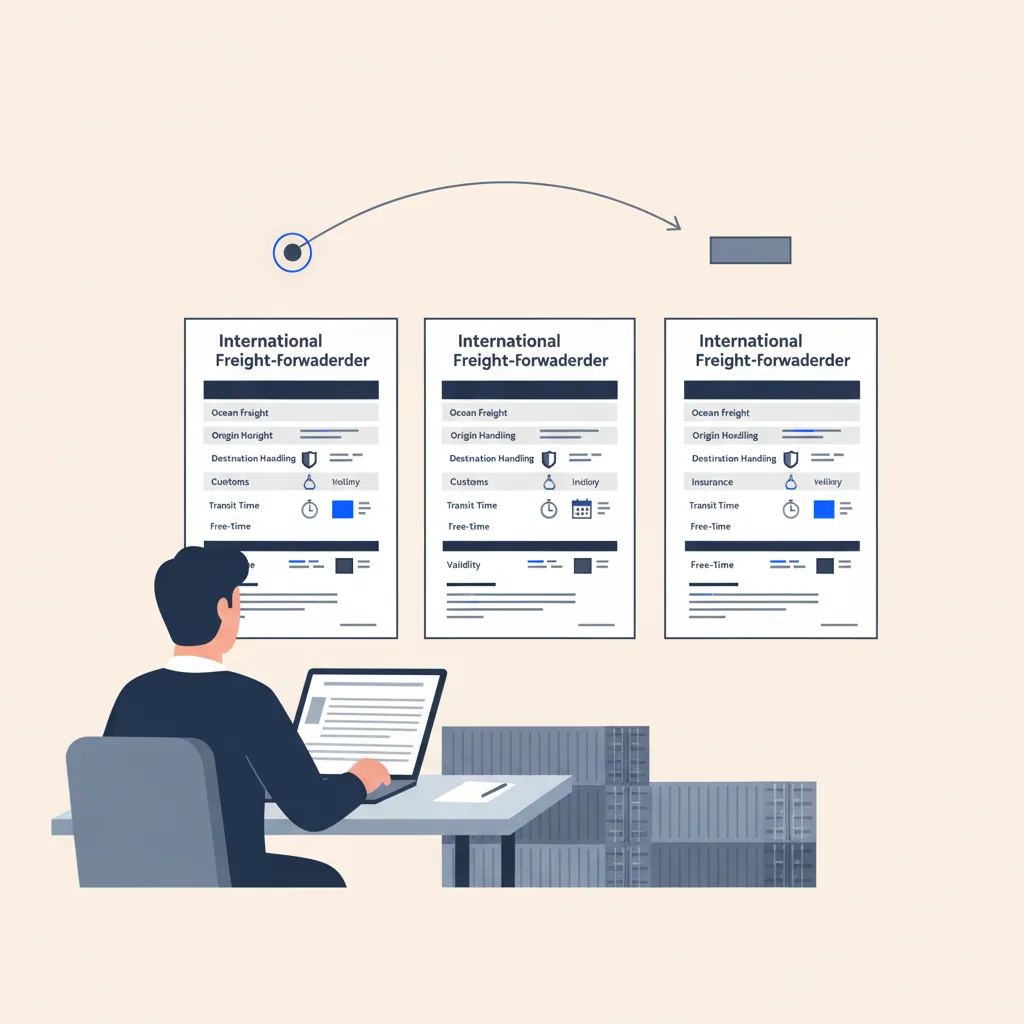
Illustrative example only: an importer has three 3PL proposals for the same B2B and DTC operation. Provider A quotes a low per-order pick fee but bills receiving, storage, packaging and returns separately. Provider B offers a higher pick rate with some packaging included but has a monthly minimum and a separate account fee. Provider C bundles transportation but does not yet disclose the carrier markup or the cost of peak surcharges. Comparing the three headline rates would produce a misleading result.
The buyer sends all three providers the same order profile, inventory data, inbound schedule, destination mix and returns assumptions. It asks each to quote the missing lines, defines the same service levels and requests a sample invoice. The model then compares recurring cost, first-year setup, unquoted items, carrier treatment and contract exit. If Provider C still cannot disclose the carrier basis, that item remains an open commercial risk rather than being filled with an invented estimate.
12. Use Needo to compare the providers and prepare the next step
Needo can read the rate cards, sample invoices, contracts and operating assumptions you provide, normalize the fee units, identify missing charges and build a side-by-side comparison. Give it the same order profile for every provider and ask it to show the source document or assumption behind each number. It can also prepare an RFQ, operational question list, pilot plan and contract issues for your procurement, operations and finance owners.
Needo does not inspect the warehouse, audit inventory accuracy, guarantee savings or replace legal, insurance or operational review. Have the responsible owners validate the model and negotiate the final SLA and contract before stock moves. The useful outcome is a comparable commercial decision and a controlled migration plan—not a larger list of warehouse names.
Sources and further reading
- Warehouse Republic — Average 3PL Costs: 2026 Fee Benchmarks
A current 2026 industry survey summary covering common receiving, storage, pick-and-pack, returns, setup and minimum-fee categories. Survey averages describe respondents and are not a quote or universal market rate.
- Fulfill.com — 3PL Pricing Guide, updated 29 October 2026
A recent commercial guide summarizing 3PL pricing components and published benchmarks. Use it as a prompt for questions, not as a substitute for a provider's current written rate card.
- Maersk — Terms for Detention and Demurrage
Carrier terms defining free time, storage, demurrage and detention. These terms are carrier- and location-specific; check the actual contract and local tariff for the shipment.
- International Chamber of Commerce — Incoterms Rules 2020
Official ICC overview of the rules that allocate delivery, cost, risk and responsibilities between buyers and sellers. Use the correct rule and named place in the underlying sales contract.
Sources support the specific points noted above. Confirm current requirements for your product, destination and contract before committing.
Need the actual problem solved?
This guide explains the method. Needo can work from your specific requirement, compare relevant options, verify important details and help move the next step forward.
Start with your exact problem →Selling or exporting? See live buyer requirements by product · see a sample verified shortlist