NEEDО · SUPPLIER PAYMENT CONTROLS
How to Verify a Supplier Bank-Account Change Before Paying
A supplier asks you to replace the bank account used for future invoices. The request may be legitimate, but it is also the kind of change that can redirect a genuine payment if an email account, invoice or contact route has been compromised. Treat it as a separate payment-control event—not as a small correction to a vendor record. This guide gives procurement and accounts-payable teams a practical way to pause, verify through a trusted channel, compare the evidence and record who approved the change. It does not authenticate a bank account or replace your bank's, supplier's or organization's secure process.
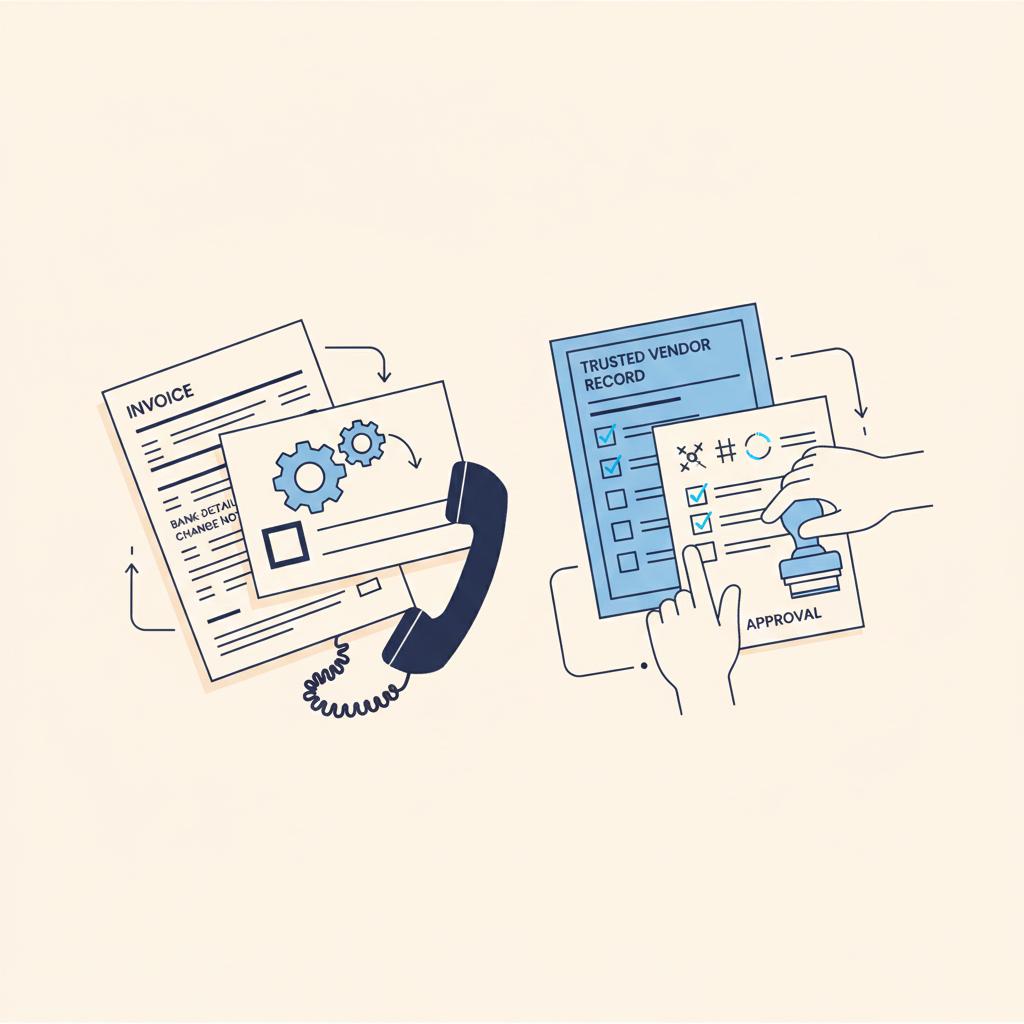
Treat every bank-detail change as a new payment instruction
A familiar supplier name, a reply in an existing email thread or a convincing invoice layout does not prove that the new payment instruction came from the supplier's authorized finance team. Business email compromise can involve a spoofed address or a compromised legitimate mailbox. A criminal may know the order, invoice amount, contact names or delivery context and use those details to make a change request appear routine.
The UK's National Crime Agency invoice-fraud guidance tells businesses to check changed invoice or bank details, resist urgent-payment pressure, call the genuine supplier using a previously used number and retain the communication trail. The FBI's Internet Crime Complaint Center likewise advises using a secondary channel to verify changes to account information. The operational lesson is simple: do not approve a changed payee solely because the request arrived through a familiar channel.
Changes that should trigger a controlled review
- A new account number, IBAN, routing code or beneficiary name
- A different bank, bank country, currency or payment route
- A request to pay an affiliate, agent or alternative beneficiary
- A last-minute change to remittance instructions or invoice footer
- A new phone number, email address or portal introduced alongside the bank change
- Pressure to pay immediately, keep the change confidential or bypass normal approval
Pause the vendor-master change and the affected payment
Do not overwrite the approved supplier record as soon as the email arrives. Put the proposed change into a pending state, preserve the original record and flag invoices that could be paid using the new instruction. Follow your organization's documented payment-hold and escalation procedure; the exact authority to place a hold depends on your role and internal policy.
Separate three actions that are often mistakenly treated as one: verifying the request, changing supplier master data and releasing a payment. The person who receives the request should not be the only person who validates and approves it. If your process supports a secure supplier portal or authenticated master-data workflow, use the established route rather than accepting a bank-change form by email alone. Do not create a new process during an active suspected incident; involve finance, treasury, procurement and security owners as appropriate.
Immediate control checklist
- Record the date, time, sender, invoice and affected supplier ID
- Keep the previously approved bank instruction unchanged
- Mark the proposed instruction as pending—not approved
- Identify invoices, payment runs and purchase orders affected
- Notify the authorized finance owner through your internal escalation route
- Do not send funds to the proposed account while required checks remain unresolved
Verify through a contact route you already trust
Find the supplier's phone number or secure contact route from a trusted vendor record that existed before the change request, a previously verified contract or an independently located official company source. Do not use the phone number, reply address, QR code, attachment link or new portal supplied in the change message as the verification channel. If the trusted contact record was changed recently, verify that earlier change independently too.
Call the supplier's established main line or known finance contact. Explain that your team received a request to change payment instructions and ask the supplier to confirm whether an authorized person initiated it. Where the supplier has a secure authenticated portal or formal bank-detail amendment process, ask them to complete that process. A caller who answers a familiar number is not automatically sufficient if the number itself may have been redirected; use the proportionate controls required by your risk policy and bank.
A short independent callback script
- “We are calling using the contact route already held in our supplier record.”
- “We received a request dated [date] to change the payment instructions for supplier [legal name / supplier ID]. Did your authorized finance team initiate it?”
- “Please confirm the legal payee name, bank country, currency and effective date through your established secure process.”
- “We will not accept or approve the change from this call alone; our finance team will complete its documented approval steps.”
- Record the person reached, the number or portal used, date/time, questions asked and the result.
Compare the old and proposed instructions without exposing full bank data
Compare the supplier's legal entity and beneficiary name first. Then compare the bank name, country, currency, payment method, account type and only the masked account identifier needed to distinguish the old and new records. Check whether the proposed payee is the same legal entity named in the contract, purchase order and invoice. If an alternative payee is permitted, confirm the contractual and approval basis rather than assuming that a similar trading name is sufficient.
Keep the evidence minimal. Do not paste full account numbers, full IBANs, online-banking credentials, card details, passwords or one-time passcodes into a general research tool or ordinary email. A masked identifier such as the final four characters may help reviewers distinguish records without exposing the entire account. Your bank or secure vendor-master system—not a blog checklist or AI assistant—must perform any account verification that requires full financial details.
Fields to reconcile
- Supplier legal name and supplier-master ID
- Beneficiary / account-holder name and any permitted-payee basis
- Bank name and country, currency and payment rail
- Masked account identifier and the date the existing record was approved
- Invoice number, PO number, contract reference and payment due date
- Source and authority for the requested change, plus independent confirmation result
Use dual control and preserve an audit trail
For material payments, require the level of independent review specified by your organization's policy. One person may perform the callback, another may approve the vendor-master change and a separate authorized person may release the payment. The roles and monetary thresholds vary by organization; do not copy a generic threshold from another company and treat it as your control policy.
The change record should make the decision reproducible. Preserve the original request, previous genuine invoice or remittance advice, masked comparison, trusted contact source, callback result, supplier's secure confirmation, internal approvals and the effective date of the change. Keep the original vendor record or a version history so a later reviewer can see what changed and when. Do not delete suspicious messages or edit original documents to make them appear consistent.
Minimum change-control record
- Supplier ID, legal name and affected invoice / PO references
- Old and proposed beneficiary details in masked form
- Reason for the change and the supplier's requested effective date
- Independent contact source and callback outcome
- Evidence reviewed, exceptions and unresolved questions
- Requester, verifier, approver and payment releaser
- Final status: rejected, pending, verified under policy or escalated
Check whether the communication channel itself may be compromised
A supplier's genuine mailbox can be compromised, so checking only the visible sender address is not enough. The UK National Cyber Security Centre describes a case in which attackers altered supplier bank details in an invoice and created mailbox rules that diverted messages containing words such as payment, invoice and bank details. The organization later found that a genuine supplier was chasing an invoice it believed had already been paid.
If the request is suspicious, ask your IT or security team to review the relevant mailbox, forwarding and inbox rules, sign-in history, delegated access and any unusual changes to supplier contact records. Check lookalike domains and altered reply-to addresses. Do not click links or open unexpected attachments simply to investigate them. Keep the incident response within your organization's security process and avoid accusing a supplier before the facts are established.
Signals worth escalating
- Unexpected gaps or delays in messages from a regular supplier
- A supplier says it never sent the change or did not receive a payment query
- A new email domain differs by a hyphen, extra word or altered character
- Vendor contact details changed shortly before bank details changed
- A message asks staff to avoid a known phone number or normal approval process
- Unusual mailbox forwarding, deletion or sign-in activity
If a payment has already been sent, contact your bank immediately
If you discover that funds may have gone to an unauthorized account, contact your bank or payment provider immediately using its official fraud contact route. Ask what recall, hold, trace or beneficiary-bank notification steps are available and follow the bank's instructions. The IC3 advises contacting the originating financial institution as soon as the fraud is recognized; the National Crime Agency guidance also tells victims to contact their bank, report the incident and retain the email and invoice trail.
Report the incident to the appropriate law-enforcement or fraud-reporting authority for your jurisdiction, and preserve original emails, attachments, invoices, payment references, call notes and internal approvals. Do not assume that a transfer can be reversed or that reporting guarantees recovery. The speed and available remedies depend on the payment rail, banks, countries and facts of the incident.
Use Needo to prepare a review pack—not to authenticate the account
Needo can compare the previous genuine invoice, purchase order, supplier record and proposed change notice; list the fields that differ; identify missing evidence; draft a callback script; and prepare an exception record for the authorized finance owner. Provide only the minimum necessary, masked information and remove account numbers, credentials, personal identifiers and unrelated financial data before uploading documents.
Needo cannot call the supplier or bank in this workflow, authenticate an account holder, inspect a bank's private records, guarantee that a message is genuine, change your vendor master or authorize payment. Use the output to make the review more structured, then complete the independent verification and approvals in your own trusted systems.
Illustrative example: a new beneficiary arrives with an urgent invoice
- A buyer receives an email from what appears to be a regular supplier. The message says the supplier has moved banks and asks that an invoice due today be paid to a new account in another country. The team compares the sender and beneficiary with its approved record, places the change in pending status and calls the supplier using the number already on file. The supplier says no change was requested. Finance preserves the message, keeps the old vendor record, alerts its security team and follows its incident procedure. The example is illustrative; a different result would require the same independent verification and documented approval, not an automatic assumption that every international account change is fraudulent.
Sources and further reading
- National Crime Agency — Invoice Fraud Leaflet
Official UK guidance says to check bank-detail changes and urgency, verify by calling a previously used supplier number, use a second approver for high-value payments and retain the communication trail.
- FBI Internet Crime Complaint Center — Business Email Compromise
Current IC3 guidance describes business email compromise and recommends a secondary channel or two-factor process to verify account-information changes; it also advises contacting the originating bank quickly if fraud is recognized.
- UK National Cyber Security Centre — Implementing Effective Cyber Security Measures
Reviewed 8 April 2025; includes a supplier bank-detail compromise case and lessons on trusted-phone verification, mailbox-rule checks and monitoring.
Sources support the specific points noted above. Confirm current requirements for your product, destination and contract before committing.
Need the actual problem solved?
This guide explains the method. Needo can work from your specific requirement, compare relevant options, verify important details and help move the next step forward.
Start with your exact problem →Selling or exporting? See live buyer requirements by product · see a sample verified shortlist